The September 2026 Deadline: Why the “Open” in Android is About to Disappear
Google's upcoming 'Developer Verification' requirement threatens the future of Android as an open ecosystem. From F-Droid to indie developers, discover why mandatory registration represents a critical blow to user freedom under the guise of security.
We’ve all heard the marketing for years: Android is the open alternative. It’s the platform for the builders, the tinkerers, and the people who believe that if you bought the hardware, you should own the software.
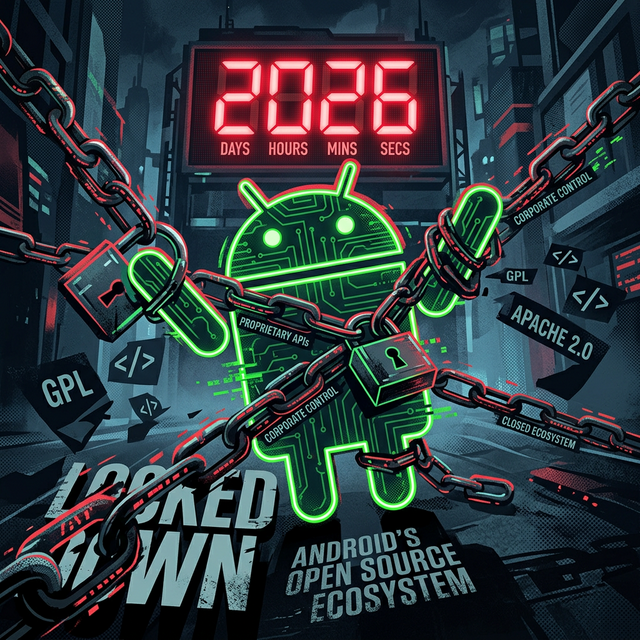
But if you visit the countdown at the top of our homepage, you’ll see a clock ticking down to September 2026. That is the date Google has set to fundamentally break that promise.
1 What’s Actually Happening?
Google is introducing a "Developer Verification" requirement. On paper, they’re calling it a security upgrade to fight malware. In reality, it’s a digital border check.
Starting in late 2026, Android will require every single app to be registered by a "verified" developer to even be installed on a certified device. This isn't just for the Play Store; it’s for sideloading too. If you’re a student building a niche tool for your friends, or a privacy advocate creating an anonymous encrypted chat app, you will now have to:
-
Pay a fee to Google for the "privilege" of developing for your own phone.
-
Hand over your government ID to a multi-billion-dollar corporation.
-
Give up your private signing keys, giving Google the technical infrastructure to potentially intercept or alter your code.
2 Why You Should Care (Even if You’re Not a Dev)
This isn't just "tech talk" for developers. It’s a direct blow to user freedom.
Think about F-Droid. For over a decade, F-Droid has been a sanctuary for Free and Open Source Software (FOSS). It’s where you go for apps that don't track you, don't show you ads, and don't answer to a corporate board. Because many FOSS developers value anonymity and independence, they cannot or will not register with Google’s central database.
If this policy goes through, those apps will simply stop working on your next phone. You’ll be left with a "locked-down" device that looks a lot more like an iPhone than the Android we grew up with.
3 The Myth of "Security"
Google claims this is about keeping us safe from malware. But we already have security layers: robust OS sandboxing, Play Protect native checks, and user warnings for sideloaded apps.
Forcing a developer in a high-risk region to hand over their identity to a US-based corporation doesn’t make users safer—it makes developers more vulnerable and gives a single tech giant an undeniable monopoly on determining "trust."
4 What You Can Do Today
The most important thing to know is that this isn't a done deal yet. Regulatory bodies around the world are finally looking at big-tech gatekeeping, and public pushback is the most powerful tool we have.
- Switch to Alternative Stores: Start using F-Droid today. The more people using alternative marketplaces, the harder it is for Google to claim they don't matter.
- Spread the Word: Google hopes this happens quietly. Challenge the "well, actually..." posts you see on social media and elevate the discussion.
Developers: Resist and Refuse
If you are an app developer, do not sign up for the early access program, perform identity verification, or accept an invitation to the Android Developer Console. Respond (politely) to any invitation with a list of your concerns and objections.
"It is only through developer acquiescence and capitulation that their takeover plan can possibly succeed."
Discourage peers from joining. Use community forums to spread the message. Embed the FreeDroidWarn library in your code. Maintain the resistance.
Web Site Owners: Show Your Support
Consider adding the countdown banner to the top of your web pages. You can add it using a single <script> tag with no dependencies, featuring 20 built-in localizations.
Action Item for Indian Citizens
If you are a citizen of India, you hold leverage to block anti-competitive actions in one of Android's largest markets. Report Google’s mandatory registration as an abuse of dominant position to the Competition Commission of India (CCI).
Email: [email protected]
Contact the Competition Commission of India (CCI) ↗ to express concerns regarding developer gatekeeping.
Keep Android Open. Before the clock hits zero.
Manish Kumar
Strategic Intelligence Division
Adayptus Consulting is a premier provider of enterprise cybersecurity solutions, specializing in Managed SOC, Penetration Testing, and GRC strategy. Our intelligence division regularly publishes research to help CISOs navigate the evolving threat landscape.