Top 10 Cloud Security Risks Every CISO Must Address in 2026
As multi-cloud environments and Kubernetes deployments expand, so does the attack surface. Discover the pivotal cloud security threats, from IAM misconfigurations to ransomware in the cloud, and how to fortify your public cloud security.
Cloud risk registers tend to list technologies. That is the wrong axis. What actually determines whether a cloud environment survives an intrusion is who can reach what, and whether anyone would notice — and almost every serious cloud incident traces back to one of a small number of recurring failures.
The ten below are the risks we encounter most consistently in enterprise assessments across AWS, Azure and GCP. They are ordered by how often they contribute to real impact rather than by theoretical severity, and each is paired with the control that actually prevents recurrence rather than the one that fixes today's instance.
This is written for CISOs deciding where to spend a finite budget. If you can only address the first three, you will have removed most of the paths an attacker would realistically use.
- 01Identity is the control plane. Over-privilege is the risk that turns a minor foothold into a major incident.
- 02Machine identities outnumber humans, hold standing privilege, and sit outside MFA by design.
- 03Most breaches are configuration failures, not platform failures — the provider's side is rarely the problem.
- 04Unmonitored logging is indistinguishable from no logging when you need to investigate.
- 05Fix at the template and the pipeline, or the same findings return at the next assessment.
The Ten, Ranked by Real Impact
| # | Risk | Control that prevents recurrence |
|---|---|---|
| 1 | Over-privileged identities and roles | Usage-derived least privilege; just-in-time elevation |
| 2 | Unmanaged machine and workload identities | Workload identity federation; no static long-lived keys |
| 3 | Publicly exposed storage and data services | Account-level public access blocking; external verification |
| 4 | Unrestricted network and management-plane exposure | Private endpoints; bastion or session manager; IaC guardrails |
| 5 | Missing or unmonitored logging | All-region audit logs to an isolated account, routed to a SOC |
| 6 | Secrets in code, images and pipeline state | Managed secrets service; commit-blocking secret scanning |
| 7 | Insecure infrastructure-as-code defaults | Policy-as-code gating in the pipeline; hardened shared modules |
| 8 | Container and Kubernetes misconfiguration | Admission control; non-root workloads; private API endpoints |
| 9 | Unknown and orphaned assets | Continuous external discovery; ownership tagging enforced |
| 10 | Third-party and SaaS integration risk | Vendor assessment; scoped tokens; OAuth consent restricted |
Why Identity Sits at the Top
In cloud, identity is the network. Historically an attacker needed a path through firewalls and segments; in a cloud environment, an over-privileged role provides that path directly. The blast radius of any compromise is determined almost entirely by what the compromised identity could already do.
The reason it persists is organisational rather than technical. Broad permissions are granted during development to unblock a deployment, and nobody revokes them afterwards — because revoking risks breaking something while leaving them costs nothing visible. There is no alert for excess privilege; things simply keep working.
Machine identities make it worse. Service accounts, workload identities and pipeline roles typically outnumber human users several times over, frequently hold broad standing permissions, and are excluded from multi-factor authentication by design. An organisation that hardens human identity thoroughly often finds its remaining exposure concentrated entirely in machine accounts nobody owns.
The single highest-value exercise: every major provider exposes access analysis showing which granted permissions have never actually been used. Running that report and removing unused permissions is usually the fastest meaningful reduction in cloud blast radius available to you — and it costs a day, not a project.
The Visibility Problem
Risks five and nine are the ones that turn a contained incident into an unbounded one.
Logging that is disabled to control cost, enabled in one region but not others, or enabled everywhere and read by nobody produces the same outcome during an investigation: you know something happened and cannot establish what was accessed. That forces worst-case assumptions in breach notification. For Indian organisations, CERT-In's six-hour reporting obligation assumes you have the telemetry to recognise an incident at all — logs retained but unmonitored do not satisfy that in practice.
Unknown assets are the same problem earlier in the chain. A forgotten staging environment, a subdomain pointing at a decommissioned service, a cloud account opened by a project team — none appear in a scan scoped to your known inventory, and all are enumerable by an attacker within minutes. This is why continuous external discovery belongs at the front of the process rather than as an optional extra.
Why the Same Findings Keep Returning
If your assessment reports look similar year after year, the issue is not remediation effort — it is that fixes are being applied to running resources while the source is untouched.
A permissive security group corrected in the console returns on the next deployment if the Terraform module still defines it that way. An insecure default in a shared module propagates to every team that consumes it. A container image rebuilt from an unpatched base reintroduces the same vulnerabilities on every release. Fixing the instance treats the symptom; fixing the template and enforcing policy-as-code in the pipeline treats the cause.
Track recurrence explicitly as a metric. A high recurrence rate is the clearest possible signal that remediation is happening downstream of the actual problem.
A Prioritised Programme
- 01Run access analysis and strip permissions never used.
- 02Inventory machine identities and replace static keys with federated, short-lived credentials.
- 03Enable account-level public access blocking, then verify from outside.
- 04Remove internet-facing management access across every account and region.
- 05Route cloud telemetry into a monitored SOC, not just a retention bucket.
- 06Add policy-as-code gating so non-compliant infrastructure cannot deploy.
- 07Enforce ownership tagging, and treat untagged resources as candidates for removal.
- 08Restrict third-party OAuth consent to administrator approval.
- 09Validate the result with a manual assessment — posture tools cannot see chained attack paths.
How Adayptus Helps
- Cloud Security Assessment — manual review across AWS, Azure and GCP, with a free retest.
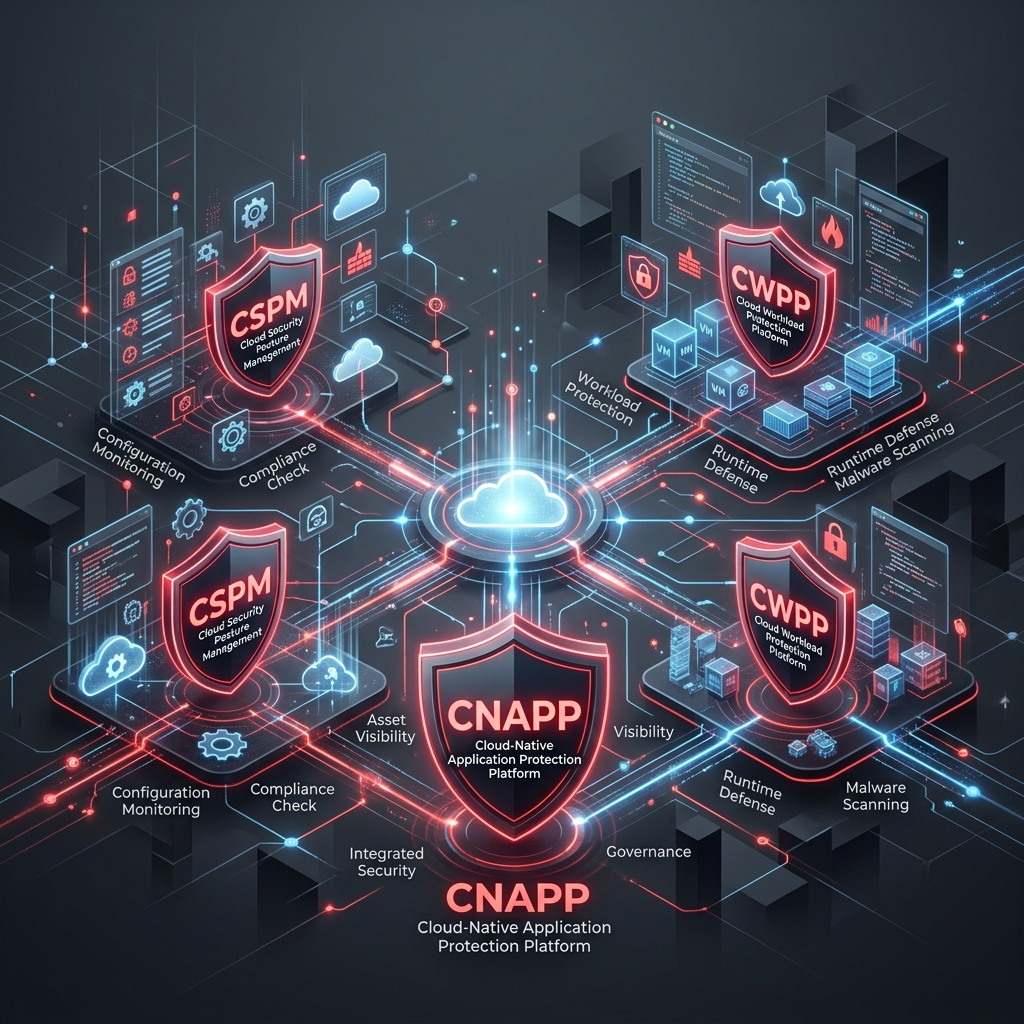
- CSPM and CWPP — continuous posture coverage between deep assessments.
- Cloud Identity Review — the over-privilege problem addressed directly.
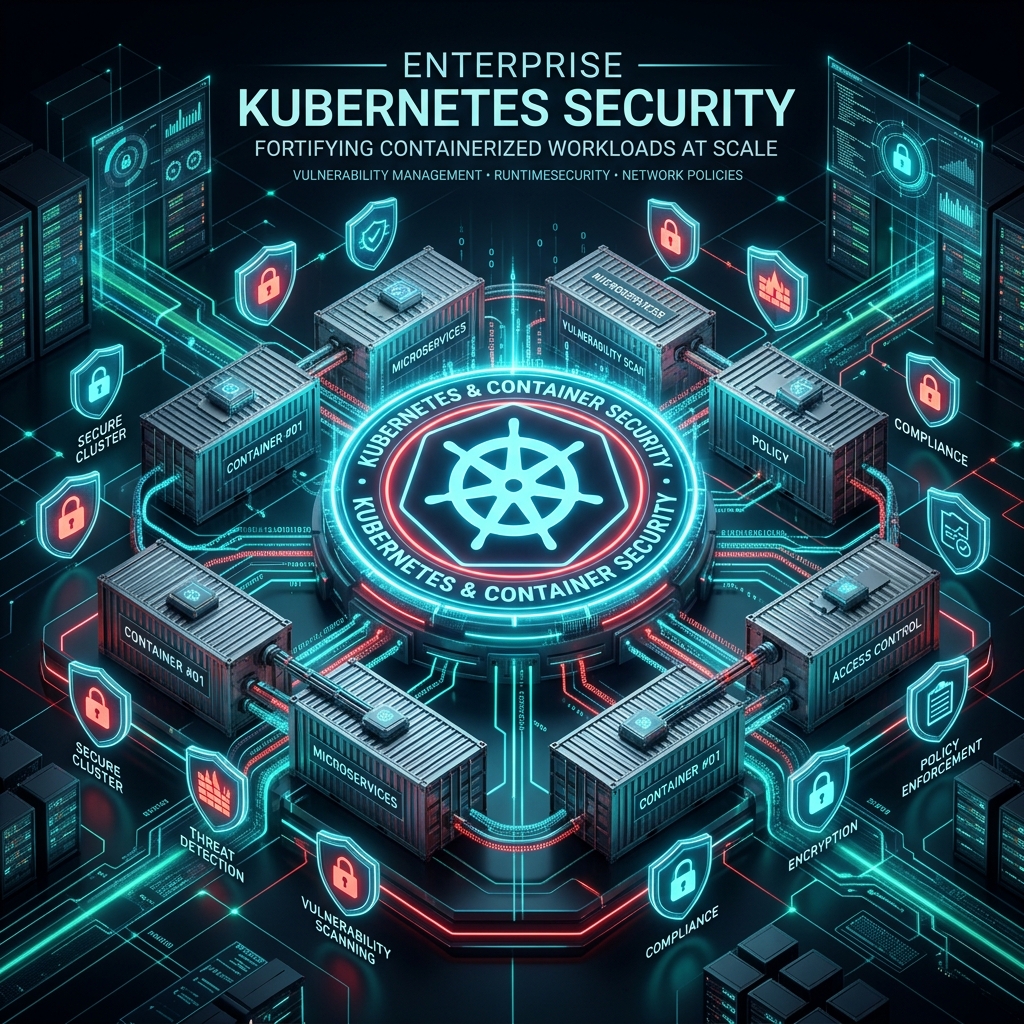
- Container & Kubernetes Security and CI/CD Security Review.
- Attack Surface Management — finding the assets your inventory does not list.
- Managed SOC & MDR — turning cloud telemetry into detection.
Related reading: the misconfigurations behind most cloud breaches and CSPM vs CWPP vs CNAPP explained.
Frequently Asked Questions
Click any question to expand the answer.
QWhich cloud security risk should we address first?
Over-privileged identity. In cloud, identity is effectively the control plane, so the blast radius of any compromise is determined by what the compromised identity could already do. Every major provider exposes access analysis showing which granted permissions were never used, and removing those is usually the fastest meaningful reduction in exposure available — a day of work rather than a project.
QWhy are machine identities such a large cloud risk?
Service accounts, workload identities and pipeline roles typically outnumber human users several times over, hold broad standing permissions, and are excluded from multi-factor authentication by design because no human is present to approve. They are also rarely reviewed, since nobody receives a leaver notification for a service account. Organisations that harden human identity thoroughly frequently find their remaining exposure concentrated entirely in machine accounts with no owner.
QAre cloud breaches usually the provider's fault?
Very rarely. Under the shared responsibility model the provider secures the underlying platform while you configure identity, network exposure, storage access, encryption policy and logging on top. Almost all significant cloud incidents originate on the customer side of that boundary — a permissive role, an exposed data service, an unmonitored account — which is why assessment effort belongs there rather than on platform assurance.
QIs retaining cloud logs enough for compliance?
Retention may satisfy an audit control, but it will not help you during an incident. Logs nobody monitors are an archive, not a detection capability, and CERT-In's six-hour reporting obligation assumes you can recognise that an incident occurred. Enable audit logging across every region and account, write it to an isolated account an attacker cannot reach with production credentials, and route it into a monitored SOC with detections built on it.
QWhy do our cloud assessment findings repeat every year?
Because fixes are applied to running resources while the source is untouched. A security group corrected in the console returns on the next deployment if the Terraform module still defines it that way, and an insecure default in a shared module propagates to every consuming team. Remediate at the template, enforce policy-as-code gating in the pipeline, and track recurrence as a metric — repeat findings are the clearest signal you are treating symptoms.
QDoes a multi-cloud strategy increase risk?
Usually yes, though not for the reason people expect. The platforms themselves are comparably secure; the risk comes from expertise being spread thinner across genuinely different identity models, logging formats and permission semantics. Teams fluent in one provider make incorrect assumptions in another, and controls that are consistent in principle diverge in implementation. If you operate multi-cloud, assess each environment on its own terms rather than assuming a single mental model transfers.
Adayptus Consulting
Strategic Intelligence Division
Adayptus Consulting is a premier provider of enterprise cybersecurity solutions, specializing in Managed SOC, Penetration Testing, and GRC strategy. Our intelligence division regularly publishes research to help CISOs navigate the evolving threat landscape.