Cloud App and Config: Security for Cloud-Connected Apps
Most applications are only as secure as the cloud services behind them. What the ADA Cloud App and Config Profile covers, why it is built on the CIS benchmarks, and what the laboratory does to your cloud accounts.
App Defense Alliance
Most applications are only as secure as the cloud services behind them. This profile addresses the back end and, crucially, how it is configured.
In short. This profile looks at the cloud services your application depends on and how they are configured. It exists because a well-written application on a badly configured cloud account is still a breach waiting to happen. It covers AWS, Google Cloud Platform and Microsoft Azure, and it is built on the CIS benchmarks.
What is this?
The App Defense Alliance, usually shortened to ADA, is an industry group that sets security standards for apps. It began at Google in 2019 and moved to the Linux Foundation in 2024, so it is no longer run by any single company. Google, Meta and Microsoft sit on its steering committee.
The Cloud App and Config Profile is a distinct profile in the App Defense Alliance requirement set, with its own specification and test guide. It addresses the security expectations for applications that connect to cloud services. The emphasis on configuration is deliberate, and it is the part most often neglected.
It covers the three major providers: Amazon Web Services, Google Cloud Platform and Microsoft Azure.
What it is built on
This profile does not invent its own checks. It builds on the Center for Internet Security benchmarks, which is genuinely good news for you: the CIS benchmarks are widely implemented, and if you already run a CIS scan you have done a real part of this profile already.
| Provider | Benchmarks the profile draws on |
|---|---|
| Amazon Web Services | CIS AWS Foundations Benchmark, with full CIS Level 1 coverage |
| Google Cloud Platform | CIS GCP Foundation Benchmark, with full CIS Level 1 coverage |
| Microsoft Azure | CIS Azure Foundations Benchmark, plus the CIS Azure Compute Services and Azure Database Services benchmarks, together with additional requirements added by the profile |
In short. The practical consequence is worth acting on. Run a CIS benchmark scan against your accounts before you do anything else on this profile. Because the requirements are built on those benchmarks, the scan output maps closely onto them, and it is the single most efficient piece of preparation available in any of the ADA profiles.
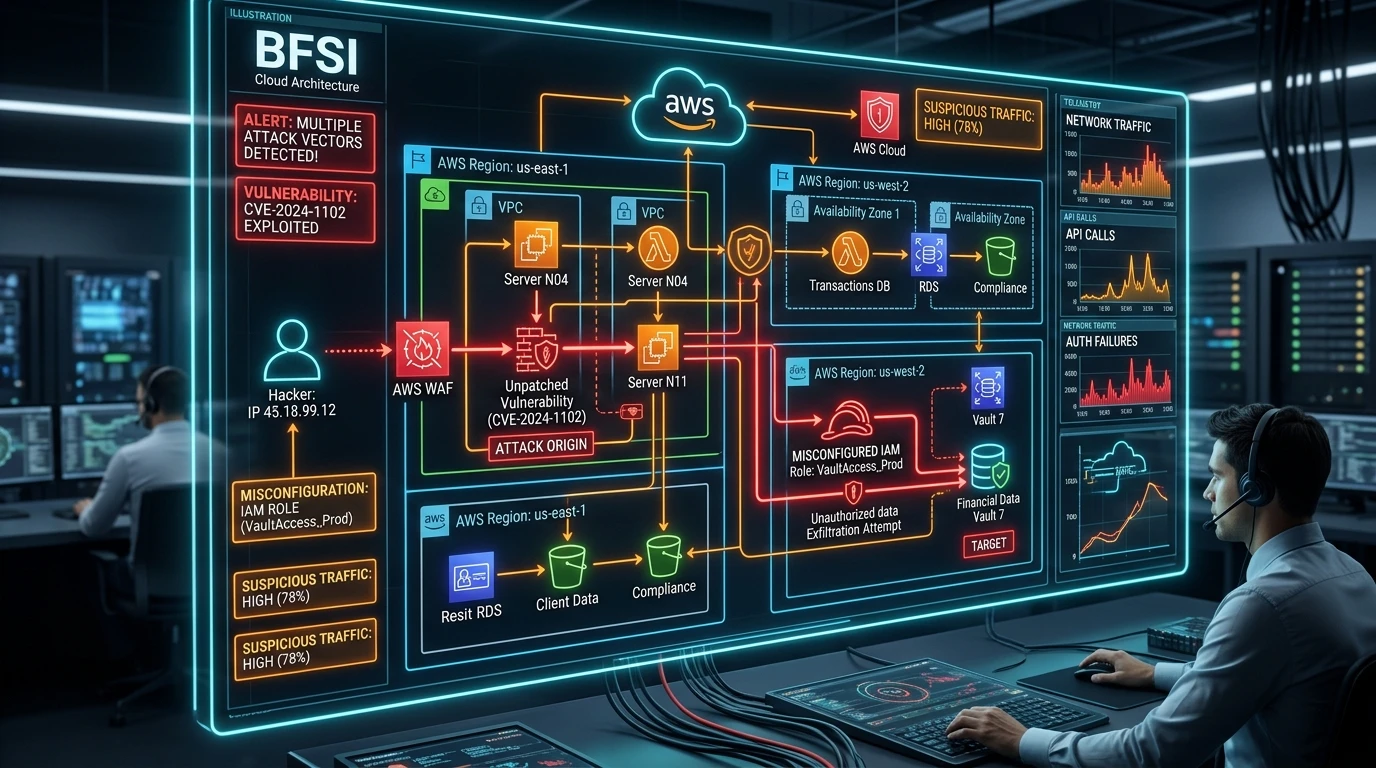
Here is the distinction that makes this worth a separate look. Application code and cloud configuration fail in different ways, and finding one kind of problem tells you nothing about the other.
| Code review finds | Configuration review finds |
|---|---|
| Injection flaws, broken access control in your logic, weak session handling, unsafe input processing | The storage bucket readable by anyone, the database with a public endpoint, the service account permitted to do everything, the audit logging that was never switched on |
Most publicly reported cloud data exposures have been configuration problems rather than code problems. A team can do everything right in the application and still lose a database because somebody opened a firewall rule to debug a problem at midnight and never closed it.
ADA does not test apps itself. It publishes the requirements, then authorises independent laboratories to do the testing. A lab has to earn that authorisation, and part of earning it is holding accreditation to ISO/IEC 17025, the international standard for testing laboratories. The point of the arrangement is that the people judging your app have no commercial interest in the answer.
Who is required to complete it
This question gets muddled because there are three different answers and people run them together. Nobody is required by law. Some organisations are required by a platform or a contract, which in practice is just as binding. Everyone else chooses.
| Who you are | Is it required? | Why |
|---|---|---|
| Any application with a cloud back end | Effectively in scope | Which is nearly every modern application. If you are being assessed at all, your configuration will be looked at somewhere. |
| An application storing user data in cloud object storage | Effectively required | Storage misconfiguration is the most common cause of accidental data exposure at scale. This is the highest-value check available to you. |
| A team that has grown fast or inherited its cloud estate | Strongly advisable | Cloud accounts accumulate permissions, resources and exceptions, and almost nobody cleans up. An outside look usually finds things nobody remembers creating. |
| A company with regulatory or contractual obligations | Strongly advisable | Configuration evidence is asked for repeatedly in enterprise reviews and regulatory questionnaires. |
| A serverless product | Effectively required | Serverless shifts almost the entire security surface into configuration. There is less to patch and much more to configure correctly. |
| An application with no cloud dependency at all | Not applicable | Rare, but if it genuinely applies to you, this profile is not yours. |
The distinction that matters in practice: if a platform or a customer has made the assessment a condition of something you need, treat it as a hard requirement with a date attached. If nobody has asked, it is an investment decision, and you should judge it on whether the findings and the report are worth the cost to you.
The checklist is public, and free
This is the most useful thing to know before you spend any money, and most developers do not know it. The App Defense Alliance publishes its requirement sets openly on GitHub. You can read the exact bar you will be measured against, work through it yourself, and fix what fails before engaging anybody.
| What | Where |
|---|---|
| Repository | github.com/appdefensealliance/ASA-WG |
| This profile's folder | /Cloud App and Config Profile |
| Version history and releases | github.com/appdefensealliance/ASA-WG/releases |
| Licence | Creative Commons Attribution-ShareAlike 4.0 |
Each profile publishes three documents. The Cloud App and Config Specification is the requirement list: an identifier and a one-line description, and deliberately nothing more. The Cloud App and Config Test Guide is the one you actually want, because for each requirement it gives the description, the rationale, the evidence you must submit, the test procedure, the acceptance criteria and any scope limitations. There is also an Audit Summary, used mainly by laboratories for recording outcomes.
The key point. Read the Test Guide, not just the Specification. The Specification tells you a requirement exists. The Test Guide tells you what evidence will be accepted, which is what determines whether your self-assessment succeeds.
Assurance levels: how much of the work is yours
How much you do, versus how much a laboratory does, depends on the assurance level. This is the single biggest driver of what an assessment costs you, so establish it early.
| Level | Name | Who tests | Who checks |
|---|---|---|---|
| AL0 | Self assessment | You. Described as being for low risk products. | Nobody independent |
| AL1 | Verified self assessment, or developer tested and lab reviewed | You run the test cases and submit evidence. | An independent assessor confirms your evidence is complete and sufficient |
| AL2 | Lab assessment | The laboratory tests your product directly. | The laboratory, with its own independent internal review |
AL1 is the level most developers meet, and it is worth being precise about what it asks. You are not signing a statement that you comply. You are running the test procedure and producing evidence that demonstrates it, and a reviewer then judges whether that evidence is sufficient. Thin or ambiguous evidence gets sent back, and every round trip costs you time.
Confirm this. One point to confirm rather than assume: the repository README describes three levels including AL0, while some profile specifications present only AL1 and AL2. That may mean AL0 is not offered for every profile. Check which levels apply to yours before you plan, because it determines whether you need a laboratory at all.
What gets tested
The profile organises its requirements into six domains: compute; identity and access management; logging and monitoring; networking; storage; and database services. In plain terms:
| Area | The question being asked |
|---|---|
| Identity and permissions | Does any user, role or service account have far more permission than it needs? Are there credentials unused for a year and never revoked? |
| Storage exposure | Is any storage bucket, disk snapshot or backup readable without authentication? |
| Network exposure | Which services are reachable from the internet, and does each one need to be? |
| Secrets management | Where do API keys, database passwords and tokens live? Are any in source control, container images or plain-text environment variables? |
| Encryption | Is data encrypted at rest and in transit, and who controls the keys? |
| Logging and monitoring | If something happened, would you know? Are audit logs enabled, retained long enough, and protected from deletion? |
| Backup and recovery | Do backups exist, are they protected, and has a restore ever actually been tested? |
| Separation of environments | Can development or staging reach production data? Are they in separate accounts? |
| Platform defaults | Have insecure defaults been changed, and are new resources created securely by default? |
| Third-party integrations | What access have you granted to outside services, and is any of it broader than needed? |
What the laboratory actually does
Most developers have never seen inside a laboratory engagement, and the phrase independent assessment hides a lot of specific process. Here is what actually happens, and why each part is there. Knowing this makes you a much better buyer. For the whole engagement phase by phase, including the acceptance checks and the independent review, see what the laboratory actually does.
Before the lab is allowed to accept the job
An authorised lab cannot simply take your money and start. Before it accepts, it has to satisfy itself of several things, and record that it did:
- Competence. It has people qualified for your assessment type. ADA specifies which certifications the engagement team must hold, and a lapsed certification does not count.
- Capacity and tooling. It has the qualified tools and the test environment your cloud environment needs, and the time to do the work properly.
- No conflict of interest. This one matters to you. A lab that has previously assessed or advised on your application, or that helped you build it, is barred from validating it. If a firm offers to fix your app and then certify it, that is not an arrangement an authorised lab can make.
- An independent reviewer. It has someone available who took no part in the testing and who will check the work. If no independent reviewer is available, the lab should decline the engagement, because it would not be able to release your report.
- Agreed scope. Which cloud environment, which build, which requirements apply, what is excluded and why, all written down before testing begins.
Who is on the engagement
| Role | What they do |
|---|---|
| Engagement Partner | Accepts the engagement and is accountable for how it is run. Usually your main point of contact. Signs the report. |
| Engagement Team Lead | Runs the testing day to day and makes sure findings are recorded properly as they are found. |
| Security Assessors | Do the actual testing and record the evidence. Work only within the assessment types they are individually authorised for. |
| Quality Control Reviewer | Independent. Took no part in the testing. Re-examines the evidence behind every verdict and can refuse to let the report out. |
In short. The reviewer is the part clients least expect and the part that does the most work protecting them. They are not a proofreader. They re-examine the evidence and can overrule the testing team's conclusion in either direction. Nobody in the lab's sales function can overrule them, and their pay cannot depend on your verdict. If you only ask a prospective lab one question about its process, ask who your reviewer will be and how they are independent of the testing team.
How the lab handles your cloud environment
There is no build to hand over. What the lab needs instead is read-only access to the configuration of the accounts in scope. The lab records which accounts, projects or subscriptions were examined, and the date and time the configuration was captured, because cloud configuration changes continuously and the report describes a snapshot rather than a steady state.
- A hash is recorded on receipt. The lab takes a cryptographic fingerprint of exactly what it received, so there is never an argument later about which version was tested.
- A clean environment is built for you alone. Your engagement gets its own test environment, isolated from other clients' work, and it is destroyed when the engagement closes.
- Tools are checked before use. The lab confirms each tool is at the version it has qualified and produces the expected result on a known input. A tool that fails that check is not used.
- Your data stays separated. One client's data must not be reachable from another client's engagement. This is a requirement, not a courtesy.
How evidence works, and why you should care
This is the real difference between a laboratory assessment and a consultant's report. For every requirement, the assessor has to record evidence good enough that a different competent assessor could repeat the work and reach the same conclusion. Not a summary, and not a conclusion. The actual input, the action taken and the observed result, captured at the time it happened.
Two consequences follow, and both are in your favour:
- A lab cannot fail you on a hunch. If the evidence does not demonstrate that a requirement is unmet, the assessor cannot record a Fail. Findings have to be shown, not asserted.
- A lab cannot pass you on your word. If you tell the assessor a control works and they do not verify it, that is recorded as your statement, not as a validated Pass, and the report has to disclose which requirements were self-attested rather than validated. This protects you too: it means nobody can later claim the lab checked something it did not.
How the verdict is reached
Each requirement in scope gets one of three verdicts. There is no partial credit and no overall score that hides the detail.
| Verdict | What it means |
|---|---|
| Pass | The evidence obtained demonstrates the requirement is met for the version tested. |
| Fail | The evidence obtained demonstrates the requirement is not met. |
| Inconclusive | The requirement was examined but could not be determined. The report has to say why, and what would be needed to determine it. |
Watch the Inconclusive count on your report. Inconclusive is the easy place to park a difficult judgement, and a well-run lab monitors its own rate for exactly that reason. If a large share of your requirements came back Inconclusive, ask why: usually it means the scoping was wrong or something the lab needed was never provided. It is worth knowing when a laboratory is allowed to record Inconclusive, because it may not be used where the evidence would support a Fail.
The independent review
Before anything is released, the reviewer works through the engagement and checks, among other things:
- that the build tested is the build received, by reference to the recorded hash;
- that the approved environment and qualified tools were actually used;
- that every verdict is supported by contemporaneous evidence;
- that no Inconclusive verdict is standing in for a Fail the evidence would support;
- that requirements you self-attested, and requirements excluded from scope, are disclosed;
- that remediation guidance is specific to your application rather than generic advice;
- that nobody who was barred or recused took part.
If any of that fails, the reviewer sends it back or withholds the report. That review is itself a record, kept whether or not it changed anything, because a review that found nothing is evidence the control was operating.
What the report has to contain
A cloud configuration profile report is not a free-form document. Certain elements are mandatory, and the reason each one is there is worth understanding:
| Element | Why it is required |
|---|---|
| A unique report identifier | So the report can be referenced precisely and cannot be confused with another. It also lets you prove which report a customer is looking at. |
| The laboratory's name and address | So you and anyone you show the report to know exactly who stands behind the conclusions. |
| Your name and contact details | Identifies who the report was issued to. It also underpins the rule that nobody else may rely on it. |
| The environment identity: which cloud accounts, projects or subscriptions were examined, which regions, and when the configuration was captured | So there is no possible doubt about what was tested. This is the element that protects you if someone later claims the wrong version was assessed. |
| The requirement set and its version | The bar you were measured against. Without the version, a conformity statement means very little, because requirement sets get revised. |
| Dates of receipt, testing and issue | The report describes a moment in time. These dates are what make that explicit rather than implied. |
| Where the work was performed, including any virtual environment | Assessment work is often done in an environment built for the engagement. Recording it means the conditions are reproducible. |
| A Pass, Fail or Inconclusive verdict against every requirement | The actual result, at the level of detail that lets you act on it. An overall score would hide exactly the information you need. |
| Requirements you self-attested that the lab did not validate | So nobody, including a future customer or auditor, can believe the lab verified something it did not. This protects you as much as it protects the lab. |
| Requirements not evaluated, with the reason | Exclusions have to be visible. A report that quietly omits the requirements you were going to fail is worthless to a reader and dishonest. |
| Remediation guidance for each failed requirement, specific to your application | Generic advice is not sufficient under the programme rules. You are entitled to guidance that names the component and the change. |
| A statement of conformity with the programme requirements | A statement about how the assessment itself was conducted. It is separate from the verdict on your application. |
| The attempt history: initial assessment and every retest, with dates and outcomes | So the report shows the whole story rather than only the final attempt. A reader can see that you failed, fixed and passed, which is a perfectly respectable history. |
| The name of the person who authorised the report | Somebody has to be accountable for the verdict. This is who. |
| The laboratory's limitations and disclaimers | What the report does not say. In particular that results apply only to the version tested, that the assessment was not an exhaustive hunt for every vulnerability, and that a Pass is not a guarantee of security. |
What happens to the records afterwards
The lab keeps the whole record set, not just the report: the evidence, the verdicts, the environment configuration, the review record, every version of the report and every retest. Retention is typically at least two years after the certificate expires. That exists so that if a question arises later about how a verdict was reached, the answer can actually be produced.
It also means a lab cannot quietly revise history. Every attempt at your assessment, including one that failed, is a retained record with its own report. If a lab suggests it can make a failed attempt disappear, that is a serious problem with that lab.
What you are entitled to ask for
- the scope agreement in writing before testing starts;
- the name of your Quality Control Reviewer and the basis on which they are independent of the testing team;
- the dispute process, in writing, before you need it;
- written confirmation that no part of the fee depends on the verdict;
- a clear statement of what will be published, what will be sent to ADA, and what consent you need to give;
- the lab's retention period for your data, and what is destroyed at the end of the engagement.
A lab that is reluctant to answer any of those in writing is telling you something useful.
Specific to the cloud configuration profile
- Read-only access is normally sufficient. There is rarely a good reason to give an assessor permission to change anything. If a lab asks for write access, ask why and expect a specific answer.
- Configuration review does not disturb running services. It reads settings. If any active testing is proposed, that should be agreed separately, in a defined window, with your team available.
- Your cloud provider's own rules apply. Providers have policies about testing in their environments. Configuration review is generally unproblematic; active testing may need notification. The lab should know this, but confirm it.
- Every account in scope has to be named. Forgotten accounts and old projects are exactly where the problems are, so a scope that covers only the accounts you remember is of limited use.
How it works from your side, step by step
Step 1 — Inventory what you actually have
Most teams cannot produce a complete list of their cloud resources. Start there. You cannot secure what you have forgotten about, and the forgotten things are the dangerous ones.
Step 2 — Run your provider's own tooling
Every major cloud provider has a built-in security and configuration assessment tool. Run it. It is usually free or cheap and it will find a meaningful share of the issues immediately.
Step 3 — Deal with public exposure first
Find anything reachable from the internet that should not be, and close it. This is the highest-value work you will do all year.
Step 4 — Get secrets out of the wrong places
Search source control history, container images and configuration for credentials. Rotate anything you find, because if it was committed once you must assume it is compromised.
Step 5 — Reduce permissions
Look at the broadest permissions in your account and narrow them. Tedious, and where the real risk reduction is.
Step 6 — Turn on logging and check retention
Audit logging is frequently disabled, or set to a retention period too short to investigate anything.
Step 7 — Agree scope with the lab
Which accounts, which environments, which services, and what access the lab needs. Read-only configuration access is usually enough. On picking the lab itself, see how to choose an ADA authorised laboratory.
Step 8 — Authorise the assessment
Confirm your provider's position on testing, and grant the access formally rather than by sharing somebody's credentials.
Step 9 — The lab reviews and reports
Verdict per requirement, plus findings prioritised by how exposed each one leaves you.
Step 10 — Fix, retest, and add drift detection
Fix the findings, then put automated checks in place so configuration does not quietly drift back. This is the step that makes next year's assessment cheap.
How often you have to do it again
Annually as a formal matter, but configuration differs from code in one important way: it drifts continuously. Somebody opens a port to debug a problem and does not close it. Somebody grants broad permissions to make a deployment work and never narrows them again. None of that involves a code change or a release, so none of your normal review gates catch it.
So the honest answer is that the formal assessment is annual, but configuration monitoring should be continuous and automated. Teams that put automated configuration checks into their deployment pipeline find that the annual assessment becomes a formality instead of a fire drill.
In short. This is the one profile where the annual assessment is the least important part of the answer. Continuous automated checking is what actually keeps a cloud account secure. Use the assessment to validate that your monitoring works, not as the only time anybody looks.
The mistakes we see most often
- An incomplete inventory. Resources in forgotten regions and old projects, created for a trial two years ago and never deleted.
- Long-lived credentials. Access keys created years ago, still valid, sitting in a script somewhere.
- Development able to reach production. Convenient, and one mistake away from a real incident.
- Secrets in source control. Still extremely common. Remember that deleting a file does not remove it from git history.
- Logging switched off to save money. Then no way to investigate when something happens.
- Backups never restored. An untested backup is a hope, not a control.
- Fixing findings without fixing the cause. Closing the port without asking why it was opened means it will be opened again next month.
Frequently Asked Questions
Click any question to expand the answer.
QIs this required?
It is a distinct profile with its own specification, so it is assessed in its own right rather than being folded into CASA. Whether you are required to complete it depends on the same three sources as the other programmes: a platform gate, a customer contract, or your own judgement. In practice, cloud configuration gets examined in any serious assessment of a cloud-connected application, because it is where the largest real-world exposures happen.
QHow does it actually help us?
It finds the class of problem that causes the headline data exposures: an unprotected storage bucket, an exposed database, an over-permissioned key. These are cheap to fix and catastrophic to miss. It is probably the highest return on effort of any assessment in this family.
QIsn't our cloud provider responsible for security?
Partly, and the split matters enormously. The provider secures the infrastructure. You are responsible for how you configure what you run on it: your permissions, your network rules, your storage settings, your keys. Nearly every reported cloud breach has been on the customer's side of that line.
QWhat access does the lab need?
Usually read-only access to configuration, which is what you should offer. There is rarely a good reason to grant an assessor permission to change anything.
QWill testing break our production environment?
Configuration review is read-only and does not affect running services. If any active testing is proposed, agree it separately, in a defined window, with your team on hand.
QWe use several cloud providers. Does that multiply the work?
It increases it, because each provider has its own permission model, storage semantics and logging behaviour. Include every provider holding production data in scope.
QCan automated tools do all of this?
Tools do a great deal here, far more than in application testing, because configuration is machine-readable and the profile is built on the CIS benchmarks, which scanners implement directly. What tools do less well is judgement: whether a particular permission is genuinely necessary for your architecture is a question that needs somebody who understands your system.
QWe are serverless with no servers to configure. Does this apply?
Yes, and arguably more so. Serverless shifts almost all of the security surface into configuration: function permissions, event source access, API gateway settings, secret handling.
QWhat does it cost?
It scales with the number of accounts, providers and environments in scope rather than with the size of your codebase. One well-organised account is quick. Fifteen accounts across three providers is not.
QWho actually sees the result?
That depends on the programme. Some results appear as a badge or a note on an app store listing that your users can see. Others are shared with the platform that asked you to get assessed, and are not public. Ask the lab what will be published before you start, and get it in writing. A good lab will not publish anything about your app without your written consent.
QWhat if we disagree with a finding?
You can dispute it. An authorised lab has to have a documented dispute process, and the person who decides your dispute must not be the person who made the finding. If the verdict changes, the lab has to update the report with ADA. Ask to see the dispute process before you engage a lab.
QDoes a pass mean our app is secure?
No, and be careful of anyone who tells you it does. A pass means your app met the requirements that were tested, in the version that was tested, on the date it was tested. It is not a guarantee. It is a meaningful, independently checked baseline, which is a different and more honest thing.
QCan we use our own internal security team instead?
Not for the formal validation. The whole value of these programmes is that the tester is independent of the developer. Your internal team is exactly the right people to do the preparation work and the fixing, but the validation itself has to come from an authorised lab.
QCan the lab help us fix the problems it found?
It can tell you what to change, and it should: specific remediation guidance for each failed requirement is a programme requirement, not a favour. What it must not do is implement the fix for you, because then it would be validating its own work. Advice yes, hands on your codebase no.
Where to start
Run a CIS benchmark scan and your cloud provider's own security assessment tool this week. Because the profile is built on the CIS benchmarks, that scan maps directly onto the requirements, which makes it the fastest useful thing available to you. Then close anything publicly exposed that should not be, and search your source control history for secrets. Those three actions will remove more real risk than anything else on this page.
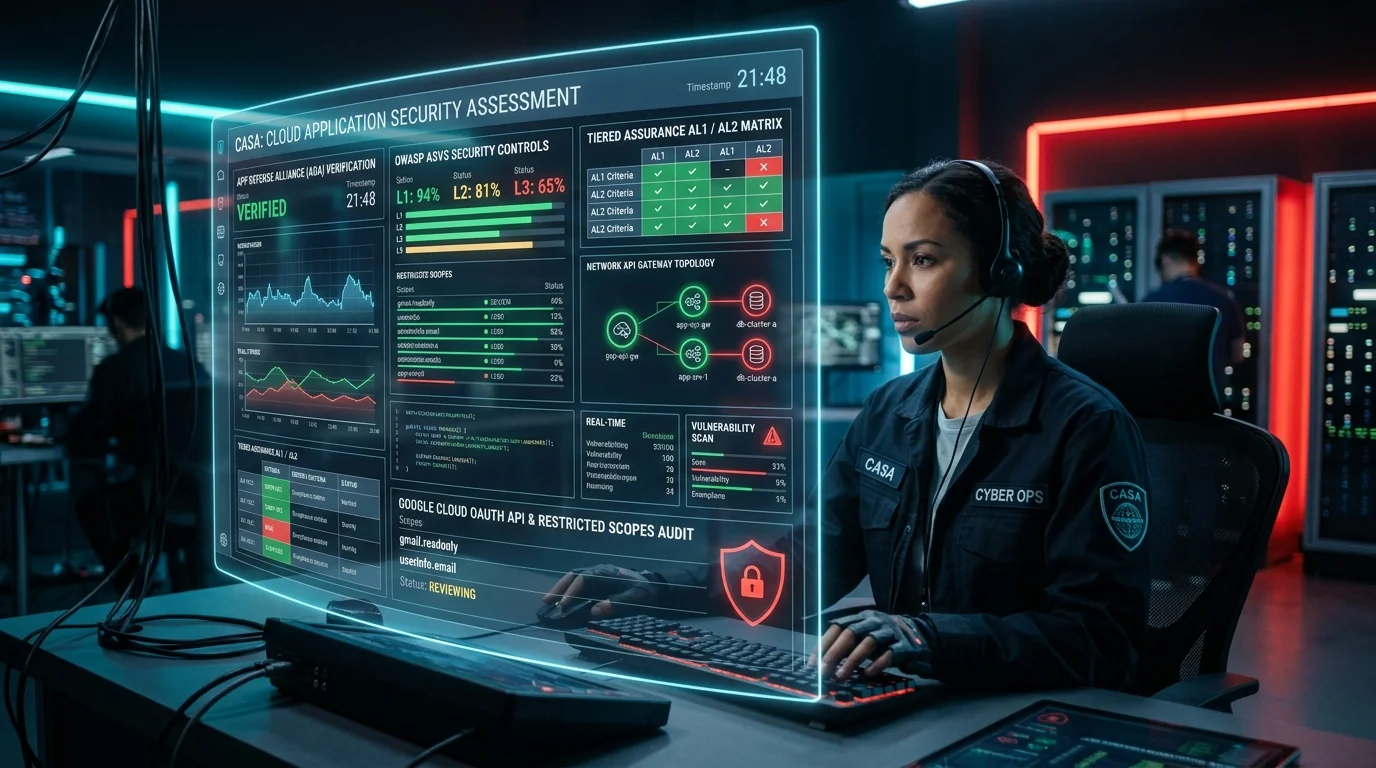
If you are also being assessed on the application itself rather than only its back end, the companion piece on CASA, the Cloud Application Security Assessment, covers the web and API side of the same family. This profile rarely travels alone.
About Adayptus
Adayptus Consulting Private Limited is an application security testing firm based in Noida, India. We have been doing web, mobile and cloud security testing since 2018.
We are currently building our laboratory management system to ISO/IEC 17025:2017 and working towards authorisation as an App Defense Alliance Security Test Laboratory. We are not an ADA-authorised laboratory today. We will say so plainly on this page until that changes, because you should be able to trust what a security firm tells you about itself.
What we can do for you right now:
- Readiness testing. We test your app against the cloud configuration requirement set and tell you what would fail, before you pay for a formal validation. Finding out early is much cheaper than failing late. In practice this is a cloud security assessment aimed at a specific published bar, with identity and permissions review where the estate warrants it.
- Fixing what we find. We give you guidance specific to your application, pointing at the actual component and the actual change needed, not a link to a general guideline.
- Evidence preparation. We help you assemble the documentation, architecture information and test accounts an authorised lab will ask for, so your validation does not stall on paperwork.
Because configuration drifts rather than sitting still, the follow-on that actually keeps an account clean is continuous validation and knowing what you expose through attack surface management, rather than waiting for next year's assessment.
Please note. One thing we will tell you up front: if we do your readiness work, we cannot later be the lab that performs your formal Cloud App and Config validation. Our impartiality rules stop us from validating an application we have already advised on. We would rather you knew that at the beginning than after you had paid us. If your priority is the formal validation, we will point you at an authorised lab and stay out of the way.
Attribution and source
Requirement identifiers, domain names and profile names in this article are drawn from material published by the App Defense Alliance in the ASA-WG repository at github.com/appdefensealliance/ASA-WG, licensed under Creative Commons Attribution-ShareAlike 4.0 International. The explanations and remediation advice are our own.
Programme requirements are versioned and they change. Before you rely on any specific detail in this article, check the current published requirements in the App Defense Alliance repository and its releases page. Where this article describes how a process generally works, that shape is stable. Where it would matter to you whether a number or a version is exactly right, confirm it at the source.
Adayptus Consulting
Application Security Testing, Adayptus
Adayptus Consulting Private Limited is an application security testing firm based in Noida, India, working across web, mobile and cloud security testing since 2018. The firm is building its laboratory management system to ISO/IEC 17025:2017 and working towards authorisation as an App Defense Alliance Security Test Laboratory; it is not an ADA-authorised laboratory today.
On This Page
- What is this?
- Who is required to complete it
- The checklist is public, and free
- Assurance levels: how much of the work is yours
- What gets tested
- What the laboratory actually does
- How it works from your side, step by step
- How often you have to do it again
- The mistakes we see most often
- Frequently Asked Questions
- Where to start
- About Adayptus
- Attribution and source