CSPM vs CWPP vs CNAPP Explained: The 2026 Cloud Security Guide
CSPM vs CWPP vs CNAPP explained — definitions, what each catches, when to use which, and a clear decision framework for cloud security in 2026.
Cloud security is drowning in three-letter acronyms. CSPM, CWPP, CIEM, CNAPP, ASPM, DSPM, SSPM — every analyst grid invents another. The result is a buying market where most teams cannot articulate what they actually need before a vendor's "platform" demo decides for them.
CSPM vs CWPP vs CNAPP is the most common version of this question, because those three labels cover the largest share of cloud-security spend. Get the framing right and the rest of the alphabet falls into place. Get it wrong and you end up paying twice for tools that overlap by 60% and miss the gap that actually matters.
This guide is the practical map. We trace where each capability came from, what it specifically catches, where they overlap, when CNAPP genuinely replaces point tools, and where it does not. By the end, security leaders, cloud architects, and CISOs will know exactly which acronym solves which problem in their environment — and which ones are a cost optimisation waiting to happen.
CSPM vs CWPP vs CNAPP — The 30-Second Answer
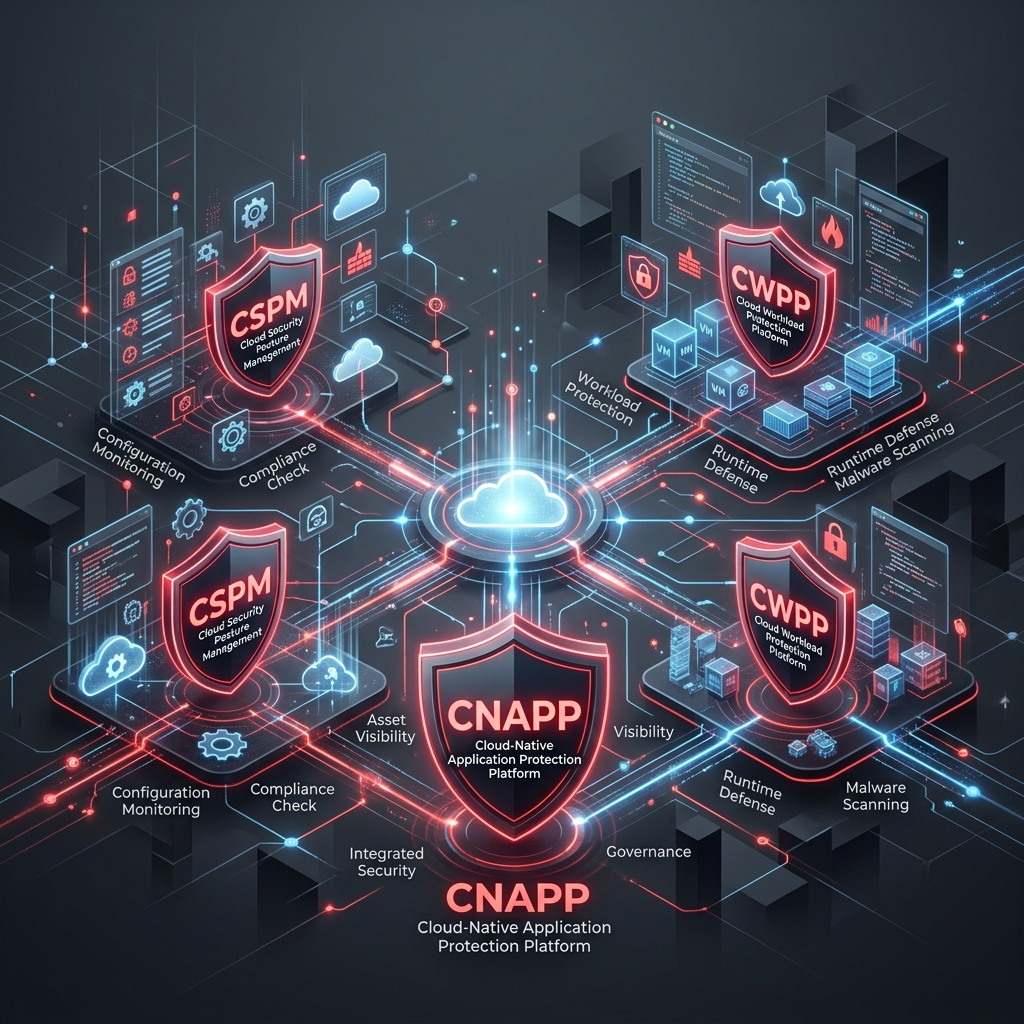
CSPM (Cloud Security Posture Management) looks at the cloud control plane — configurations, identity policies, network ACLs, storage permissions — and tells you when something is misconfigured. It catches the public S3 bucket and the over-permissive IAM role.
CWPP (Cloud Workload Protection Platform) looks at what is running inside the workload — VMs, containers, serverless — for vulnerabilities, malware, runtime threats, and drift. It catches the unpatched library and the container running a crypto-miner.
CNAPP (Cloud-Native Application Protection Platform) is not a new capability; it is a consolidation pattern. A CNAPP bundles CSPM + CWPP + CIEM (and increasingly ASPM/IaC scanning) into a single platform with one data graph and one risk-prioritisation engine. The pitch: stop buying three tools, stop correlating across three consoles.
A Quick Origin Story — Why Each Acronym Exists
Each label emerged in a different year because the cloud security problem itself kept expanding. Understanding the timeline makes the buying decision much simpler.
What Is CSPM? Cloud Security Posture Management
CSPM reads the cloud control plane — AWS APIs, Azure Resource Manager, GCP APIs — and continuously evaluates the configuration of every resource against a policy library. The output is a prioritised list of misconfigurations mapped to control frameworks (CIS Benchmarks, NIST, RBI, ISO 27001).
What CSPM specifically catches:
What CSPM does NOT catch: vulnerabilities inside a running VM, malware on a container, lateral-movement attempts at run-time, application logic flaws. CSPM is the cloud's control-plane scanner — not its endpoint protection.
What Is CWPP? Cloud Workload Protection Platform
CWPP looks at what is actually running inside cloud workloads. It uses a mix of agents, eBPF sensors, snapshot scanning, and admission controllers to inspect VMs, containers, Kubernetes nodes, and serverless functions — at build time, at deploy time, and at runtime.
What CWPP specifically catches:
What CWPP does NOT catch: a misconfigured S3 bucket sitting beside the workload, an over-privileged IAM role granting unintended cloud access, an exposed control-plane API. Those live in CSPM and CIEM territory.
What Is CNAPP? Cloud-Native Application Protection Platform
CNAPP is the consolidation answer. A modern CNAPP bundles four or five capabilities into one platform with a shared asset graph and one risk-prioritisation engine:
The strongest argument for CNAPP is not "fewer dashboards" — it is attack-path analysis. When CSPM, CWPP and CIEM share one asset graph, the platform can correlate: "this public load balancer points to this EC2 instance, which has this unpatched RCE vulnerability, which runs with this over-privileged IAM role, which has read access to this S3 bucket holding customer PII." Three point tools cannot produce that chain. A CNAPP can.
CSPM vs CWPP vs CNAPP — Side-by-Side Comparison
| Dimension | CSPM | CWPP | CNAPP |
|---|---|---|---|
| Primary focus | Cloud control-plane configuration | Workload-internal protection | Unified config + workload + identity |
| What it reads | AWS / Azure / GCP APIs | VMs, containers, serverless, K8s | All of the above + IaC + identity |
| Deployment model | Agentless (read-only API) | Agent / eBPF / snapshot | Mixed; vendor varies |
| Detects misconfigurations | Yes — primary capability | Limited | Yes |
| Detects vulnerabilities | No | Yes — primary capability | Yes |
| Detects runtime threats | No | Yes | Yes |
| Entitlement / IAM analysis | Surface-level | No | Yes — via CIEM |
| Attack-path analysis | No | No | Yes — differentiator |
| IaC / shift-left | Some vendors | Some vendors | Yes — bundled |
| Typical user persona | Cloud security, GRC | SecOps, container teams | CISO, cloud platform |
| Annual cost (mid-market) | ₹20–80 lakh | ₹30 lakh–1.2 cr | ₹60 lakh–2.5 cr |
What Each Tool Catches That the Others Miss
The clearest way to understand the boundary is through concrete attack scenarios. Here is which capability catches each common cloud-side risk.
| Scenario | CSPM | CWPP | CNAPP |
|---|---|---|---|
| Public S3 bucket exposing KYC documents | ✓ | × | ✓ |
| Unpatched RCE inside a production EC2 | × | ✓ | ✓ |
| Container image with critical CVE | × | ✓ | ✓ |
| Over-permissive IAM role chain | Partial | × | ✓ |
| Crypto-miner running on K8s node | × | ✓ | ✓ |
| Terraform deploying a public RDS | After deploy | × | ✓ (pre-deploy) |
| Privileged Pod with hostPath mount | × | ✓ | ✓ |
| Attack path: public LB → vuln VM → S3 PII | × | × | ✓ (only CNAPP) |
| CIS Benchmark drift on Azure tenant | ✓ | × | ✓ |
| RBI / DPDP compliance posture report | ✓ | Partial | ✓ |
When to Use Which — Decision Framework
Pick CSPM first if…
Posture Management
- You have not yet baselined cloud configuration drift.
- Misconfigurations are your top documented risk.
- You need a CIS / NIST / RBI compliance report by quarter-end.
- Budget is tight and workloads are limited.
- Cloud-account count is < 25.
Add CWPP if…
Workload Protection
- You run containers / Kubernetes in production.
- You have dozens of workloads and inconsistent patch hygiene.
- Compliance demands runtime threat detection.
- You need image scanning + admission control.
- Endpoint EDR cannot see your container layer.
Buy CNAPP if…
Platform Consolidation
- You already have at least two of CSPM, CWPP, CIEM — consolidation pays.
- You are multi-cloud (AWS + Azure + GCP) at scale.
- Attack-path analysis is the differentiator your CISO is asking for.
- You want one risk view across config, workload, identity, IaC.
- Cloud-account count is > 50 or workload count is > 500.
Common Buying Mistakes
1. Buying CNAPP before solving asset inventory
CNAPP onboarding starts with cloud-account inventory. Buying the platform before you can name every AWS account, Azure subscription, and GCP project is paying for a Ferrari before you have a driveway.
2. Confusing CSPM remediation suggestions with policy-as-code
CSPM will flag the misconfiguration. Closing it sustainably requires policy-as-code (Terraform Sentinel, OPA, Checkov) at the pipeline. Without shift-left, the same finding will reappear next quarter.
3. Ignoring CIEM because IAM looked "fine"
IAM in cloud is exponentially more complex than on-prem AD. CIEM is what surfaces the toxic combinations of service accounts and roles that human review misses entirely. Buy CSPM + CWPP without CIEM and the largest cloud attack vector stays invisible.
4. Treating CNAPP as set-and-forget
A CNAPP without a dedicated cloud-security engineer is alert-noise insurance. The tool is the easy half; tuning policies, mapping to your managed SOC, and feeding findings into a real remediation workflow is the work that makes it pay.
Indian Regulatory Alignment
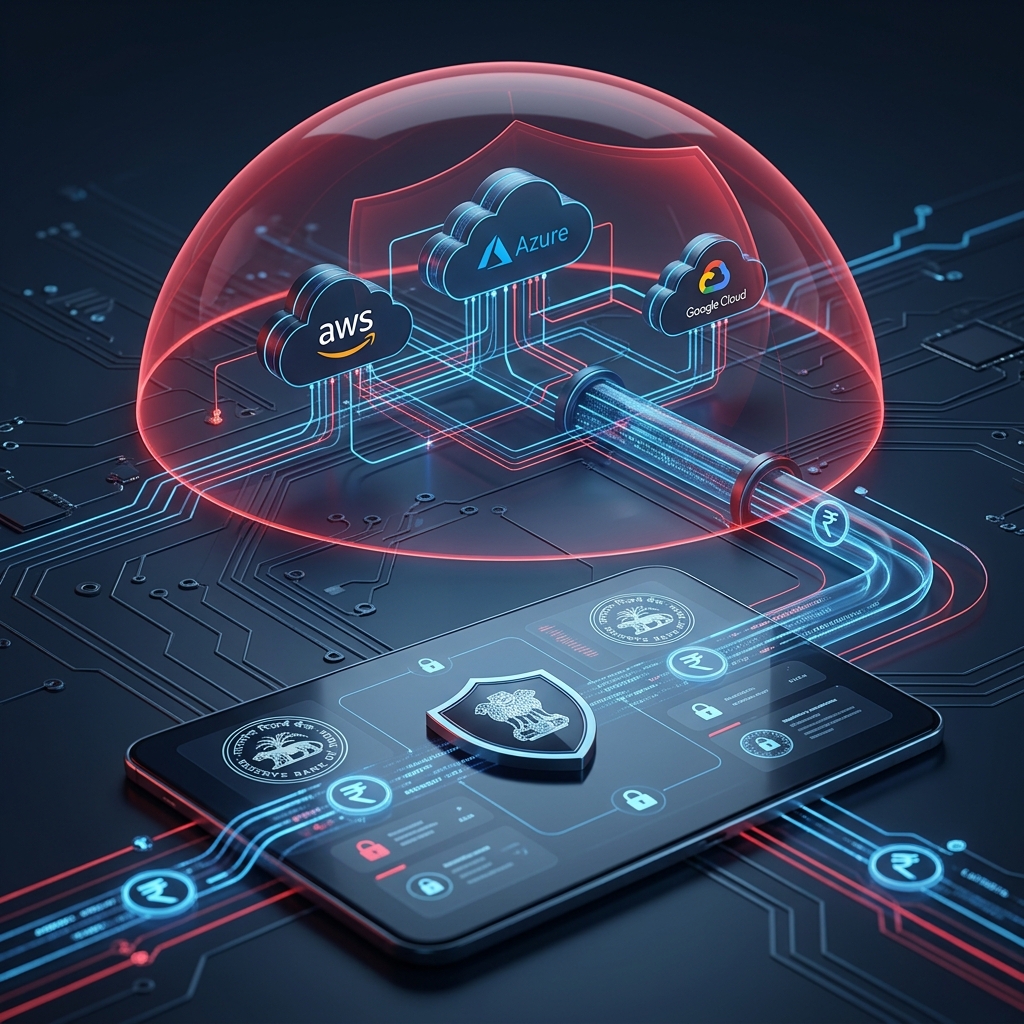
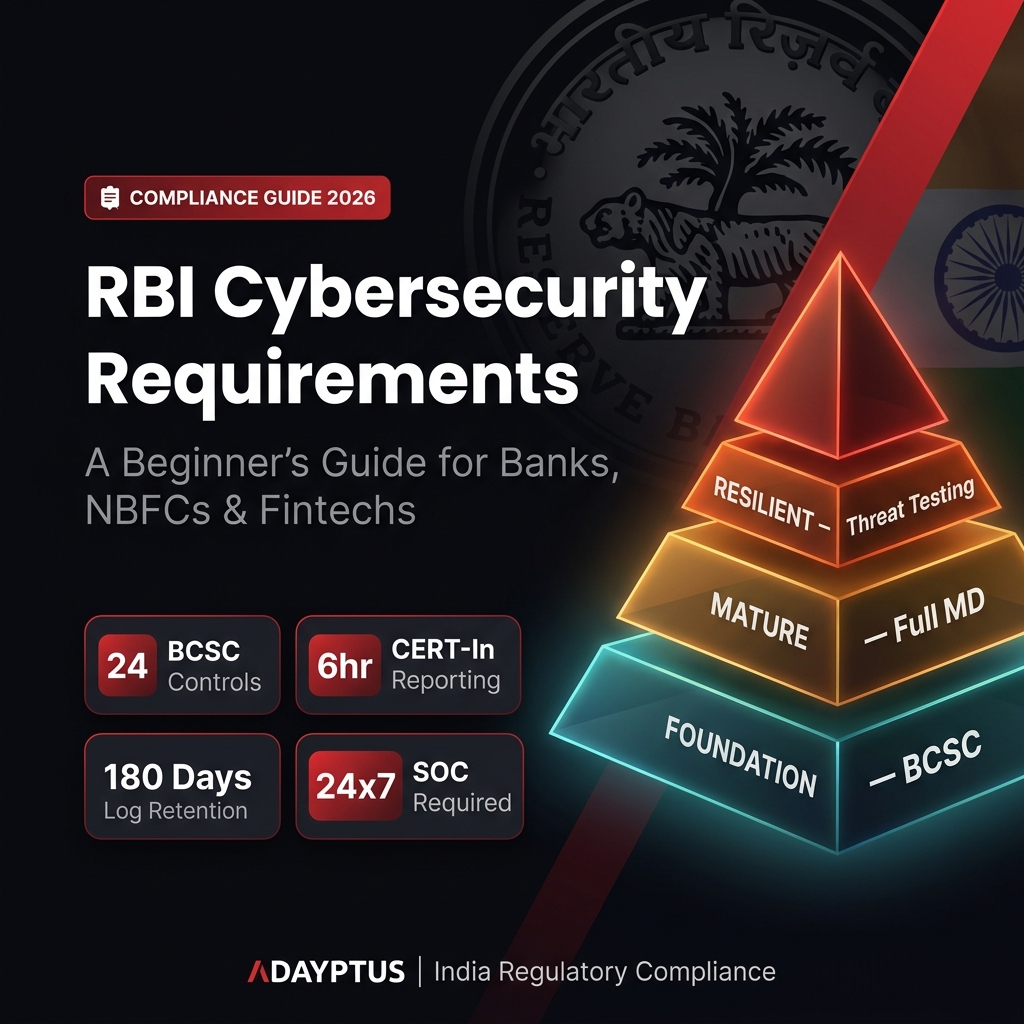
For Indian fintechs, NBFCs, payment aggregators, and other RBI-regulated entities, CSPM and CNAPP are increasingly the practical way to evidence cloud-side compliance. Configuration drift, encryption status, identity hygiene, and audit-log retention are all RBI-inspection-table-stakes; a CSPM dashboard mapped to RBI's Baseline Cyber Security Controls turns "we follow the framework" into "here is the live evidence". See our RBI cybersecurity beginner's guide for the regulatory map and our Cloud Security for Fintech & NBFC piece for the operational programme.
Frequently Asked Questions
Click any question to expand the answer.
Q Is CNAPP just CSPM and CWPP combined?
CNAPP is more than the sum of CSPM and CWPP. It adds CIEM (entitlement management) and increasingly IaC scanning / ASPM, and — critically — runs them on a shared asset graph. That shared graph is what enables attack-path analysis (e.g., "this public load balancer reaches this vulnerable VM which has this over-privileged role to this PII bucket"), which no individual point tool can produce.
Q Do I still need CSPM if I have a CNAPP?
No — a CNAPP includes CSPM as one of its pillars. Running a standalone CSPM alongside a CNAPP is duplicate spend in most cases. The only exception is when an organisation already operates a mature CSPM with deep custom policies and chooses to keep it as the single source of truth for compliance reporting while using the CNAPP for everything else.
Q CWPP vs EDR — what is the difference?
EDR was built for traditional endpoints (laptops, servers) and excels at signature and behavioural detection on long-lived OS instances. CWPP was built for ephemeral cloud workloads — containers, serverless, auto-scaling VMs — and adds capabilities EDR lacks: image scanning, admission control, Kubernetes context, agentless snapshots. Many CWPP vendors now extend into EDR territory and vice versa; the boundary is increasingly commercial rather than technical.
Q Is CSPM agentless?
Yes — classic CSPM is API-only. The tool authenticates to AWS, Azure, GCP via read-only roles and queries the control plane for resource state. No agents on workloads are required for the CSPM function itself. Agents are only required when the same vendor also delivers CWPP or runtime protection.
Q Can a CNAPP replace our SIEM and SOC?
No. CNAPP covers cloud-side prevention and detection; it is not a SIEM and it is not a managed SOC. In a mature programme, the CNAPP feeds findings to the SIEM, which an analyst-led managed SOC investigates and responds to. See our Managed SOC vs In-House SOC guide for the build-vs-buy economics on the SOC side.
Q Does CSPM, CWPP, or CNAPP help with RBI / DPDP compliance?
Yes, all three contribute. CSPM provides the configuration-and-encryption evidence inspectors expect, CWPP demonstrates vulnerability and runtime hygiene, and CNAPP brings them together with audit-grade reporting. None replaces the wider compliance programme (policies, IS audit, board oversight) — but for the cloud-control-evidence portion, a well-tuned CNAPP plus a managed SOC is the modern path.
Q Can Adayptus help us choose and operationalise CSPM, CWPP or CNAPP?
Yes — Adayptus runs vendor-neutral cloud security assessments, helps map your environment to the right CSPM / CWPP / CNAPP fit, and operationalises the platform through tuned policies, custom detections, and integration with your SIEM and managed SOC. We do not resell platforms, so the recommendation is based on your scale, regulator, and cloud architecture, not a vendor quota.
How Adayptus Helps
Adayptus delivers vendor-neutral cloud security advisory and operations for Indian and global enterprises. We do not resell CNAPP licences; we help you choose the right tool, deploy it correctly, and feed it into your SOC.
CSPM Implementation
Vendor-neutral CSPM rollout across AWS, Azure, GCP. CIS / NIST / RBI / DPDP policy library tuned for your environment.
CWPP Operations
Agent / agentless workload protection rollout, image-scanning policy, admission control for production Kubernetes.
Cloud Security Assessment
Vendor-neutral assessment that produces a build-vs-buy recommendation across CSPM / CWPP / CNAPP options, sized to your scale and regulator.
Container & Kubernetes Security
Hands-on hardening of container registries, K8s clusters, and admission policies aligned to CIS Benchmarks.
Cloud VAPT
Cloud-aware penetration testing covering IAM escape paths, container escapes, and misconfiguration chaining.
Managed SOC for Cloud
24x7 SOC consuming CNAPP / CSPM telemetry alongside SIEM logs, with detection use cases tuned for cloud-native threats.
Stop buying acronyms. Start with a vendor-neutral assessment.
Adayptus assesses your current cloud security stack against the controls that actually matter for your scale, regulator, and architecture — then recommends whether CSPM, CWPP, CNAPP, or a combination fits. No resale commissions, no vendor quotas.
Conclusion
CSPM, CWPP, and CNAPP are not competing products — they are layered answers to the same question: "is our cloud secure?" CSPM answers it for configuration. CWPP answers it for workload. CIEM answers it for identity. CNAPP answers it across all three with a shared graph and attack-path analysis. The right purchase depends entirely on how much of that surface you already cover, how mature your cloud platform team is, and whether attack-path correlation will move the needle for your CISO this year.
Disclaimer: This article is informational and reflects observations from cloud security assessments and CNAPP rollouts in 2025-2026. Pricing ranges are indicative and vary materially with vendor, region, and contract structure. Final architectural and procurement decisions should involve appropriate technical and commercial advisors.

Peyush Baranwal
Senior Delivery Manager — Cyber Security, Adayptus
Peyush Baranwal is a Senior Delivery Manager at Adayptus Consulting with 11+ years of experience designing, implementing, and managing enterprise security programmes. His core expertise spans Vulnerability Assessment & Penetration Testing (VAPT), Application Security, and Security Operations — leading web, mobile, API, and infrastructure security assessments for CISOs and security teams across BFSI, healthcare, and SaaS. He focuses on measurable risk reduction, governance maturity, and operationalising detection-and-response capability. Outside work, Peyush is a passionate biker and part-time photographer.
Connect on LinkedInOn This Page
- CSPM vs CWPP vs CNAPP
- A Quick Origin Story — Why Each Acronym Exists
- What Is CSPM? Cloud Security Posture Management
- What Is CWPP? Cloud Workload Protection Platform
- What Is CNAPP? Cloud-Native Application Protection Platform
- CSPM vs CWPP vs CNAPP — Side-by-Side Comparison
- What Each Tool Catches That the Others Miss
- When to Use Which — Decision Framework
- Common Buying Mistakes
- Indian Regulatory Alignment
- Frequently Asked Questions
- How Adayptus Helps
- Conclusion