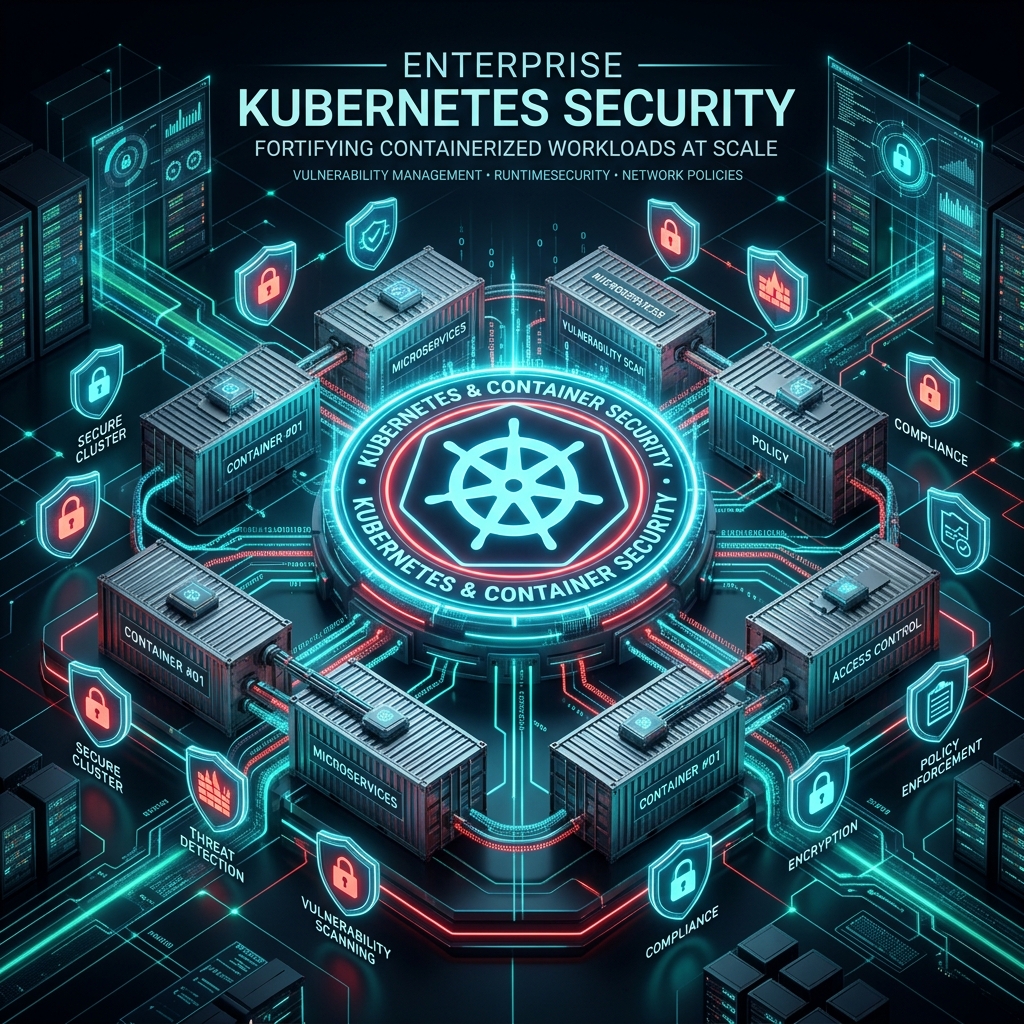
Kubernetes & Container Security Best Practices (2026)
A practical Kubernetes security guide — the 4C model, image and registry hardening, RBAC, network policies, runtime protection, secrets, and a container security best-practices checklist for 2026.
Kubernetes runs the modern enterprise — and its defaults were designed for developer velocity, not security. Left unhardened, a cluster is a soft, richly-connected target: a single exposed dashboard, an over-privileged service account, or a vulnerable base image can hand an attacker the keys to every workload you run. This guide lays out Kubernetes and container security best practices that actually hold up in production in 2026.
Containers and Kubernetes change the security model in three ways: workloads are ephemeral (a server your EDR watched for months is now a pod that lives for 40 seconds), the attack surface is layered (code, container, cluster, cloud), and most of your image is code you didn't write. Traditional endpoint and network tooling simply cannot see inside this world — which is exactly why cloud-native security is its own discipline.
We'll walk the full lifecycle — build, ship, run, and the cluster itself — using the widely-adopted 4C model (Cloud, Cluster, Container, Code), map each layer to concrete controls and benchmarks, flag the mistakes we see most often in assessments, and show how Adayptus Consulting helps teams secure their Kubernetes estate end to end.
- 01 Secure all 4C layers — Cloud, Cluster, Container, Code — a weakness in any one undermines the rest.
- 02 Shift left: scan images and IaC in CI, sign artifacts, and enforce policy at admission — don't wait for runtime.
- 03 Lock down the cluster: least-privilege RBAC, Pod Security Standards, default-deny network policies, and a private API server.
- 04 Assume breach at runtime: non-root, read-only, dropped capabilities, plus runtime threat detection (CWPP).
- 05 Benchmark against the CIS Kubernetes Benchmark and validate with penetration testing — configuration drift is constant.
Why Kubernetes Security Is Different
A virtual machine is a long-lived, well-understood unit you can agent, patch, and monitor. A Kubernetes workload is the opposite: pods spin up and die in seconds, scale horizontally across nodes, share kernels, and are orchestrated by a powerful control plane that — if compromised — controls everything. Three shifts define the challenge:
The large majority of Kubernetes incidents trace back to misconfiguration, not zero-days — exposed dashboards, permissive RBAC, containers running as root, and missing network policies. The good news: misconfiguration is the most fixable category of risk, and the focus of most of this guide.
The 4C Model — A Framework for Kubernetes Security
The cloud-native community's mental model for defence-in-depth is the 4C's: Cloud, Cluster, Container, Code. Each layer wraps the next, and the security of an inner layer depends on the outer ones. You cannot secure a container on a compromised cluster, or a cluster in a misconfigured cloud account.
| Layer | Scope | Key controls |
|---|---|---|
| Cloud | Provider account, network, IAM | CSPM, IAM least privilege, private networking, encryption |
| Cluster | Control plane & nodes | RBAC, Pod Security Standards, network policy, private API server, audit logs |
| Container | Images & runtime | Image scanning, signing, minimal base, non-root, read-only FS |
| Code | Application & dependencies | SAST, SCA, secrets management, secure coding, API security |
Securing the Build — Images, Registries & Supply Chain
Most container risk is decided long before runtime, in the image. Harden the build and you eliminate whole classes of production incidents.
:latestBake image scanning, software composition analysis, SBOM generation, and IaC scanning into a DevSecOps pipeline, with CI/CD security review to make sure the gates can't be bypassed. See our SBOM guide for the supply-chain rationale.
Securing the Cluster — RBAC, Policy & the Control Plane
The cluster is where a small misconfiguration becomes a total compromise. Priorities:
cluster-admin for apps or humans by default. Scope roles to namespaces and verbs; avoid over-permissioned service accounts and disable auto-mounting tokens where not needed.NetworkPolicy and explicitly allow required flows to contain lateral movement.etcd at rest, rotate certificates, disable the legacy dashboard or lock it down, and enable audit logging into your SOC.Run the CIS Kubernetes Benchmark (e.g., via kube-bench) and periodic RBAC audits as part of routine ops. Clusters drift constantly as teams ship — a config that was compliant last quarter rarely still is.
Securing the Container at Runtime
Even a clean image needs a hardened runtime posture. Set these in every pod spec:
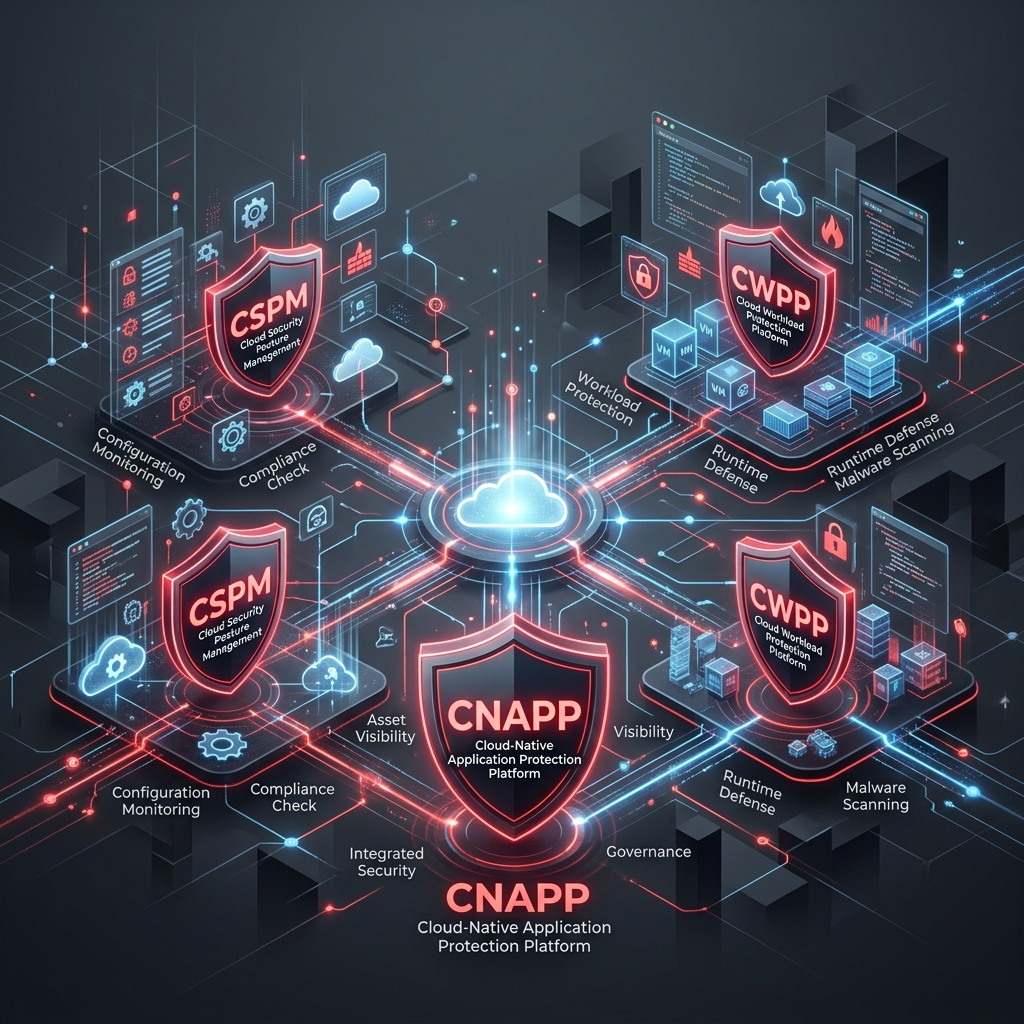
Because pods are ephemeral, you also need runtime threat detection — a Cloud Workload Protection Platform (CWPP) or eBPF-based tooling (e.g., Falco) that spots anomalous process execution, unexpected network connections, or container escapes as they happen and feeds alerts to your SOC. This is where CWPP complements the posture management of CSPM; our CSPM vs CWPP vs CNAPP guide explains how they fit together.
Securing the Code & Secrets
The innermost layer is your application. Kubernetes doesn't make insecure code secure — it just scales it. Apply SAST and SCA in CI, run secure code review on sensitive paths, threat model new services, and treat exposed APIs as first-class attack surface. For secrets: never hard-code them or store them in plain Kubernetes Secrets alone — use an external secrets manager or vault, encrypt secrets at rest, rotate regularly, and scan repos and images for leaked credentials.
Treating base Kubernetes Secret objects as "encrypted." By default they're only base64-encoded and readable by anyone with namespace access or a mounted token. Enable encryption-at-rest for etcd and front secrets with a real vault.
Common Kubernetes Security Mistakes
1. Over-permissioned RBAC & service accounts
cluster-admin handed out freely, default service-account tokens mounted everywhere. One compromised pod becomes cluster takeover.
2. No network policies
Flat, allow-all pod networking lets an attacker move laterally from a breached front-end straight to your database pod.
3. Running as root / privileged
Root containers and privileged mode make container escape to the node dramatically easier.
4. Unscanned images & :latest tags
Shipping known-vulnerable or unpinned images means you don't actually know what's running in production.
5. Exposed dashboards & API servers
Internet-reachable Kubernetes dashboards or API endpoints are among the fastest routes to full compromise.
6. No runtime detection or audit logs
Without runtime monitoring and audit logging fed to a SOC, a container escape or crypto-miner runs unseen.
Kubernetes Security Best-Practices Checklist
- ✓ Minimal/distroless base images
- ✓ Image scanning + SCA gating in CI
- ✓ Image signing & admission verification
- ✓ SBOM per image; pinned digests
- ✓ IaC / manifest scanning
- ✓ Private, access-controlled registry
- ✓ Least-privilege RBAC; no default cluster-admin
- ✓ Restricted Pod Security Standard enforced
- ✓ Admission control (OPA/Kyverno)
- ✓ Default-deny network policies
- ✓ Private API server; encrypted etcd
- ✓ Audit logging to SOC; CIS Benchmark
- ✓ runAsNonRoot + read-only root FS
- ✓ Drop ALL capabilities; no privileged
- ✓ seccomp / AppArmor profiles
- ✓ Resource requests & limits set
- ✓ Runtime threat detection (CWPP / eBPF)
- ✓ SAST + SCA + secret scanning in CI
- ✓ External secrets manager / vault
- ✓ Encrypt secrets at rest; rotate
- ✓ Threat modeling & API security
- ✓ Periodic pen testing & config review
How Adayptus Helps
Adayptus secures your cloud-native estate across all four layers. We deliver container & Kubernetes security assessments against the CIS Benchmark; cloud security assessments and secure architecture reviews for the underlying account and cluster; IaC security, SAST, SCA, SBOM, and secure code review wired into a DevSecOps pipeline with CI/CD security review; posture and runtime protection via CSPM and CWPP; and validation through penetration testing, red teaming, and continuous security validation — with detections feeding a 24×7 managed SOC. For the platform choice behind runtime protection, read CSPM vs CWPP vs CNAPP.
Is your Kubernetes estate actually hardened?
Talk to Adayptus about a CIS-aligned Kubernetes & container security assessment — from image pipeline to cluster config to runtime — with a prioritised, developer-friendly remediation plan.
Conclusion
Kubernetes security is not one control — it's defence-in-depth across Cloud, Cluster, Container, and Code, enforced continuously because clusters drift. Harden the build (scan, sign, minimise), lock down the cluster (RBAC, Pod Security Standards, default-deny networking, a private control plane), assume breach at runtime (non-root, read-only, dropped capabilities, CWPP), and never let insecure code or plaintext secrets ride along. Benchmark against CIS, validate with penetration testing, and feed runtime signals to a SOC. Do that, and Kubernetes becomes one of your most defensible platforms rather than your softest target.
Disclaimer: This article is an original, informational overview of Kubernetes and container security best practices as understood in 2025-2026. Tooling and configuration guidance are indicative; always validate against the official Kubernetes documentation, the current CIS Kubernetes Benchmark, and your environment before making changes.
References
- Kubernetes — Security documentation and Pod Security Standards.
- CIS — CIS Kubernetes Benchmark.
- NSA/CISA — Kubernetes Hardening Guidance.
- OWASP — Kubernetes Top Ten.
- NIST — SP 800-190 Application Container Security Guide.
Frequently Asked Questions
Click any question to expand the answer.
QWhat is the 4C model of Kubernetes security?
The 4C model describes cloud-native security as four nested layers: Cloud (the provider account, network, and IAM), Cluster (the Kubernetes control plane and nodes), Container (images and runtime), and Code (your application and dependencies). Each layer depends on the security of the ones around it, so effective Kubernetes security addresses all four.
QWhat are the most common Kubernetes security mistakes?
The most common issues are misconfigurations: over-permissioned RBAC and service accounts, no network policies (flat allow-all networking), containers running as root or privileged, unscanned or unpinned images, exposed dashboards or API servers, and no runtime detection or audit logging. Most Kubernetes incidents stem from these rather than novel zero-days.
QAre Kubernetes Secrets encrypted by default?
No. By default, Kubernetes Secret objects are only base64-encoded, not encrypted, and are readable by anyone with sufficient namespace access or a mounted service-account token. You should enable encryption-at-rest for etcd, restrict access with RBAC, and ideally front secrets with an external secrets manager or vault with rotation.
QWhat is the CIS Kubernetes Benchmark?
The CIS Kubernetes Benchmark is a widely-used set of consensus configuration recommendations for hardening Kubernetes clusters — covering the control plane, etcd, worker nodes, RBAC, and policies. Tools such as kube-bench automate checks against it, and it's a practical baseline for assessing and continuously monitoring cluster security posture.
QDo I need runtime security if I already scan images?
Yes. Image scanning is preventive and catches known vulnerabilities before deployment, but it cannot detect an exploit of an unknown flaw, a compromised dependency behaving maliciously, or a container escape at runtime. Runtime threat detection (a CWPP or eBPF tools like Falco) watches live behaviour and alerts on anomalies, complementing build-time scanning.
QHow does Adayptus help secure Kubernetes?
Adayptus secures the full 4C stack: CIS-aligned Kubernetes and container security assessments, cloud and architecture reviews, DevSecOps pipeline hardening with image scanning, SCA, SBOM, IaC and CI/CD security review, CSPM and CWPP for posture and runtime protection, and validation via penetration testing, red teaming, and continuous security validation, with detections feeding a 24x7 managed SOC.

Peyush Baranwal
Senior Delivery Manager — Cyber Security, Adayptus
Peyush Baranwal is a Senior Delivery Manager at Adayptus Consulting with 11+ years of experience designing, implementing, and managing enterprise security programmes. His core expertise spans Vulnerability Assessment & Penetration Testing (VAPT), Application Security, and Security Operations — leading web, mobile, API, and infrastructure security assessments for CISOs and security teams across BFSI, healthcare, and SaaS. He focuses on measurable risk reduction, governance maturity, and operationalising detection-and-response capability. Outside work, Peyush is a passionate biker and part-time photographer.
Connect on LinkedInOn This Page
- Why Kubernetes Security Is Different
- The 4C Model — A Framework for Kubernetes Security
- Securing the Build — Images, Registries & Supply Chain
- Securing the Cluster — RBAC, Policy & the Control Plane
- Securing the Container at Runtime
- Securing the Code & Secrets
- Common Kubernetes Security Mistakes
- Kubernetes Security Best-Practices Checklist
- How Adayptus Helps
- Conclusion
- References
- Frequently Asked Questions