Application Security Testing (AST): The Complete 2026 Guide
Application security testing explained — SAST, DAST, IAST, SCA and penetration testing compared, where each fits in the SDLC, and how to build an AppSec programme in 2026.
The application layer is where most breaches now begin. Injection flaws, broken access control, vulnerable dependencies, and leaked secrets do not need a network foothold — they are reachable directly from the internet, at the speed of a single HTTP request. Application security testing (AST) is the discipline of finding those flaws before an attacker does.
The problem is that "application security testing" has fractured into an alphabet soup of methods — SAST, DAST, IAST, SCA, RASP, ASPM — each with a different vantage point, a different set of findings, and a different cost. Buy the wrong combination and you get thousands of false positives and a blind spot where the real risk lives. Buy the right combination and you catch the bug in the IDE, three weeks before it would have shipped to production.
This guide is the practical map. We define what application security testing actually is, walk through every major testing type, compare them head to head, show where each fits in the software development lifecycle (SDLC), and lay out how to build a programme that reduces real risk rather than generating noise. By the end, engineering leaders, AppSec owners, and CISOs will know exactly which method solves which problem in their environment.
What Is Application Security Testing? — The 30-Second Answer
Application security testing (AST) is the practice of analysing software — its source code, its dependencies, and its running behaviour — to find security vulnerabilities before they are exploited. It spans the whole software development lifecycle, from a developer's first commit to the live production application.
There is no single AST tool. Instead there are complementary methods: SAST reads your code, SCA inspects your open-source dependencies, IAST instruments the app while tests run, and DAST plus manual penetration testing attack the running application from the outside.
The goal is not "zero findings". It is defensible coverage: every class of risk that matters to your application is being looked at by the right method, the findings are triaged and fixed, and the same bug does not keep reappearing in the next release.
Why Application Security Testing Matters in 2026
Three shifts have moved the application layer to the centre of the risk picture:
The perimeter is the application
APIs, single-page apps, and SaaS integrations expose business logic directly to the internet. There is no firewall in front of a broken authorisation check.
You ship other people's code
The majority of a modern codebase is open-source dependencies. A single vulnerable transitive package — the Log4Shell pattern — can expose every application that pulls it in.
AI writes & attacks faster
AI coding assistants generate code (and bugs) at scale, while attackers use AI to weaponise exploits in hours. The window between disclosure and exploitation has collapsed. See our analysis of the CERT-In 2026 AI Cybersecurity Blueprint.
The economics reinforce the urgency. A flaw caught by a developer's IDE costs a few minutes to fix. The same flaw caught in production can cost up to 100× more — incident response, emergency patching, regulatory notification, and reputational damage. This cost curve is the entire argument for "shift-left" security, and AST is how you shift left in practice.
The Types of Application Security Testing
Each method has a distinct vantage point. Understanding what each one sees — and what it is blind to — is the key to assembling a programme with no gaps and minimal overlap.
SAST
Static Application Security Testing. Analyses source code, bytecode, or binaries without running them. Catches injection patterns, hard-coded secrets, and insecure APIs early — directly in the IDE or pull request.
DAST
Dynamic Application Security Testing. Attacks the running application from the outside, with no view of the code. Finds real, exploitable issues — injection, misconfiguration, authentication flaws — the way an attacker would.
IAST
Interactive Application Security Testing. Instruments the application with sensors and watches it from the inside while functional or QA tests exercise it. Combines code-level context with runtime confirmation, so accuracy is high.
SCA
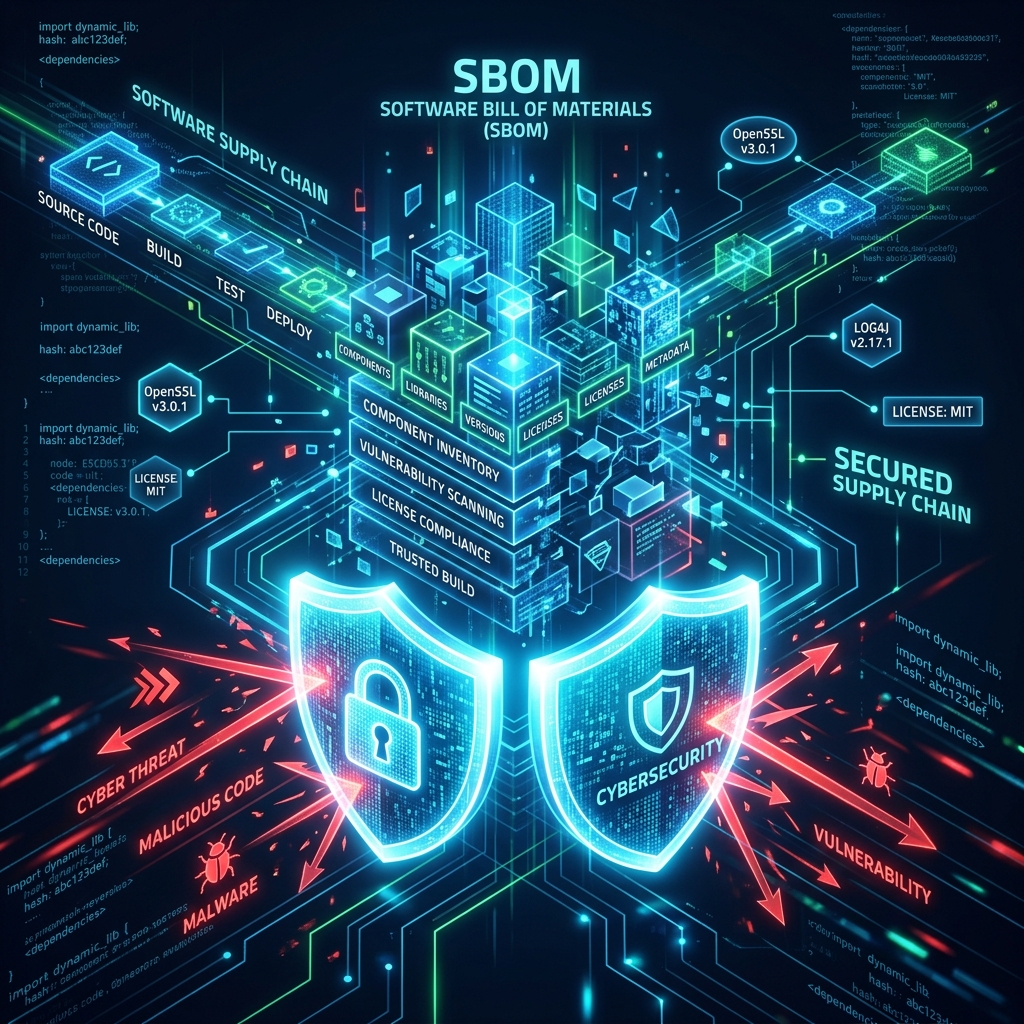
Software Composition Analysis. Inventories every open-source and third-party component, flags known CVEs and risky licences, and underpins your SBOM. Essential because most of your codebase is code you did not write.
Beyond the Core Four
SAST vs DAST vs IAST vs SCA — Side by Side
| Dimension | SAST | DAST | IAST | SCA |
|---|---|---|---|---|
| Approach | White-box | Black-box | Grey-box | Dependency scan |
| Needs running app? | No | Yes | Yes (under test) | No |
| SDLC stage | Code / commit | Test / staging / prod | QA / integration test | Build / commit |
| Best at finding | Insecure code patterns, secrets | Exploitable runtime flaws | Confirmed, low-noise findings | Known CVEs in dependencies |
| False positives | Higher | Lower | Low | Low |
| Blind spot | Runtime & logic | Unreached code | Untested paths | First-party code |
The takeaway: these methods are complementary, not competing. SAST and SCA catch problems early and cheaply but generate noise and miss runtime context. DAST and penetration testing confirm what is actually exploitable but only late, on a running app. IAST bridges the two. A mature programme uses all of them, each at the stage where it is cheapest and most accurate.
Where AST Fits in the SDLC — Shift Left, Test Right
Application security testing is most effective when it is woven through the entire lifecycle rather than bolted on at the end. The principle is "shift left, test right": catch as much as possible early (cheap), and still validate the running system (real).
This is the essence of DevSecOps and a secure SDLC: security testing is automated into the pipeline, owned jointly by engineering and security, and treated as part of "done" rather than a pre-launch gate.
How to Build an Application Security Testing Programme
Tools are the easy half. A programme that actually reduces risk follows a sequence:
Inventory your applications and risk-rank them
You cannot test what you cannot see. Catalogue every app and API, then rank by data sensitivity and exposure. Internet-facing apps handling PII or payments get the deepest testing.
Start with SCA and SAST in the pipeline
These give the fastest, cheapest coverage. Begin in "report-only" mode to baseline noise, tune the rules, then introduce blocking gates on critical, confirmed findings only. Our SAST and SCA implementation services cover the tuning that makes or breaks adoption.
Layer manual testing on high-value targets
Automated tools never find business-logic flaws or chained exploits. Schedule periodic web, API, and mobile penetration tests and secure code reviews for your crown-jewel applications.
Measure maturity and close the loop
Track mean-time-to-remediate, recurrence rate, and coverage — not raw finding counts. An AppSec maturity assessment benchmarks where you are and what to fix next.
Common Application Security Testing Mistakes
Buying one tool and calling it "AppSec"
A single SAST licence covers one vantage point. Without SCA you are blind to dependency risk; without DAST or pen testing you never confirm exploitability. Coverage comes from a layered set, not one product.
Drowning developers in false positives
An untuned scanner that floods the pull request with low-severity noise trains developers to ignore it. Tuning, severity gating, and de-duplication are what turn a scanner into a programme people trust.
Testing only at release
A single annual penetration test satisfies a checkbox but finds problems when they are most expensive to fix. Continuous, shift-left testing catches the same issues for a fraction of the cost.
Finding without fixing
A backlog of 10,000 unaddressed findings is worse than no scanner — it is documented, un-remediated risk. Prioritisation, ownership, and SLAs matter more than scan volume.
Indian Regulatory Alignment
For Indian banks, NBFCs, fintechs, and SaaS providers, application security testing is increasingly the practical way to evidence software-side compliance. RBI's Master Direction on IT Governance expects application security testing and VAPT for critical systems; the DPDP Act demands reasonable security safeguards for personal data, which begins at the application; and CERT-In's 2026 blueprint compresses remediation windows for exploitable, internet-facing flaws to hours. A documented AST programme — scans, pen-test reports, SBOMs, and remediation evidence — turns "we follow secure development" into auditable proof. See our RBI cybersecurity beginner's guide and Cloud Security for Fintech & NBFC for the regulatory map.
How Adayptus Helps
Adayptus runs application security and security testing programmes end to end — from tool selection and pipeline integration to expert-led manual assessment. We implement and tune SAST, DAST, IAST, and SCA; deliver deep web, API, and mobile penetration testing and secure code review; and embed it all into a secure SDLC and DevSecOps pipeline. Not sure where you stand? Start with an AppSec maturity assessment or talk to our team.
Conclusion
Application security testing is not a product you buy — it is a layered capability you build. SAST and SCA catch problems early and cheaply. IAST and DAST confirm what is actually exploitable. Manual penetration testing and secure code review supply the human depth that automation cannot. Woven through the SDLC and backed by real remediation, these methods turn the application layer from your biggest blind spot into one of your best-evidenced controls. The right starting point is not "which tool" but "which risks, at which stage, by which method" — and then closing the loop on every finding that matters.
Disclaimer: This article is informational and reflects observations from application security assessments and AppSec programme rollouts in 2025-2026. Statistics are indicative industry figures and vary by source, sector, and methodology. Final tooling and programme decisions should involve appropriate technical and security advisors.
Frequently Asked Questions
Click any question to expand the answer.
Q What is application security testing in simple terms?
Application security testing (AST) is the process of checking software for security weaknesses — in its source code, its open-source dependencies, and its running behaviour — so they can be fixed before an attacker exploits them. It uses complementary methods such as SAST, DAST, IAST, SCA, and manual penetration testing across the development lifecycle.
Q What is the difference between SAST and DAST?
SAST is white-box testing: it reads the source code without running it, early in development, and is good at spotting insecure patterns and secrets. DAST is black-box testing: it attacks the running application from the outside with no view of the code, later in the lifecycle, and is good at confirming what is genuinely exploitable. They find different classes of issue and are used together.
Q Is application security testing the same as penetration testing?
No. Penetration testing is one method within application security testing. AST is the broader programme that also includes automated SAST, DAST, IAST, and SCA. Penetration testing is the human-led, manual component that finds business-logic flaws and chained exploits which automated tools miss — but it is most effective on top of, not instead of, continuous automated testing.
Q Why is SCA so important if I already run SAST?
SAST analyses the code your team writes. SCA analyses the open-source and third-party components your team imports — which is typically 70-90% of a modern codebase. SAST is blind to a known CVE in a dependency, and SCA is blind to a flaw in your first-party logic. You need both for real coverage, and SCA also underpins your SBOM for supply-chain and regulatory requirements.
Q How often should we run application security testing?
Automated testing (SAST, SCA) should run on every commit or pull request — continuously. DAST and IAST run against staging on every release candidate. Manual penetration testing and secure code review are typically scheduled per major release, after significant changes, or at least annually for critical applications, with cadence driven by risk and regulatory requirements.
Q Can Adayptus help us build an application security testing programme?
Yes. Adayptus delivers the full application security lifecycle — implementing and tuning SAST, DAST, IAST, and SCA in your CI/CD pipeline; running expert-led web, API, and mobile penetration testing and secure code review; and embedding it all into a secure SDLC and DevSecOps workflow. We also benchmark maturity and map findings to RBI, DPDP, and CERT-In requirements. The recommendation is vendor-neutral and based on your risk, scale, and regulator.

Dhaval Bhanushali
Information Security Consultant
Dhaval Bhanushali is an Information Security Consultant with extensive experience in Web, API, Mobile Application, Network, Infrastructure, and Endpoint Security Assessments. He specializes in identifying security vulnerabilities, conducting penetration testing, and helping organizations strengthen their cybersecurity posture through proactive security measures and risk management. Passionate about offensive security and continuous learning, Dhaval actively contributes to the cybersecurity community and stays updated with the latest threat landscape and security best practices.
On This Page
- What Is Application Security Testing?
- Why Application Security Testing Matters in 2026
- The Types of Application Security Testing
- SAST vs DAST vs IAST vs SCA
- Where AST Fits in the SDLC
- How to Build an Application Security Testing Programme
- Common Application Security Testing Mistakes
- Indian Regulatory Alignment
- How Adayptus Helps
- Conclusion
- Frequently Asked Questions