CERT-In AI Blueprint: Implementation Guide (2026)
A practical CERT-In AI Blueprint implementation guide for Indian enterprises — governance, Zero Trust controls, exposure management, AI-aware SOC, and a 30–360 day roadmap to defend against AI-assisted attacks.
The CERT-In AI Blueprint arrived at a hinge moment for Indian cybersecurity: the point at which attackers stopped being limited by human speed. This guide turns that blueprint from a policy document into an execution plan — a practical, control-by-control roadmap that CISOs, CIOs, CTOs, and compliance leaders can actually operationalise to defend against AI-assisted cyber attacks.
Rather than restating the directive, we explain what it means in the field, expand each theme with industry context and real-world examples, and map every recommendation to concrete controls and to the way Adayptus Consulting helps organisations implement them. Whether you run a bank, an NBFC, a FinTech, a hospital network, a factory, a SaaS platform, or a government body, the objective is the same: shrink your exposure, detect at machine speed, and respond before an automated adversary finishes the job.
The old assumption — that an attacker needs weeks to research a target, write an exploit, and launch — is dead. Generative models and autonomous agents compress that loop to hours. The CERT-In AI Blueprint is India's response, and this is how you implement it.
- 01 AI has collapsed the attack timeline from weeks to hours — periodic audits and 30-day patch cycles are obsolete.
- 02 The blueprint rests on five pillars: AI-risk governance, Zero Trust identity, exposure management, an AI-aware SOC, and securing your own AI.
- 03 Deprecate SMS/OTP for admins in favour of phishing-resistant FIDO2 hardware keys, and treat known-exploited internet-facing flaws as hour-scale emergencies.
- 04 Your own AI is now an attack surface — prompt injection, RAG leakage, model poisoning, and agentic abuse need dedicated testing.
- 05 Use the 30 / 60 / 90 / 180 / 365-day roadmap in this guide to sequence controls by risk and effort.
What Is the CERT-In AI Blueprint?
The CERT-In AI Blueprint is a defensive framework published by the Indian Computer Emergency Response Team (CERT-In), under the Ministry of Electronics and Information Technology (MeitY), to help organisations reduce their exposure to — and defend against — the exploitation of vulnerabilities by AI-assisted adversaries. Its purpose is not to add another compliance checkbox; it is to force a shift in operating tempo, from reactive and periodic to continuous and threat-informed.
Objectives. The blueprint pushes organisations to (1) achieve continuous visibility of their attack surface, (2) remediate exploitable, internet-facing weaknesses at machine speed, (3) adopt phishing-resistant identity, (4) modernise detection so it catches automated and morphing attacks, and (5) govern their own use of AI so it does not become the next breach vector.
Who should follow it. While CERT-In directions apply broadly across Indian organisations, the blueprint is especially urgent for critical national infrastructure, banking, NBFCs, FinTech, insurance, healthcare, SaaS providers, manufacturing/OT operators, and government departments — any entity whose systems are internet-reachable and whose data is valuable. It complements sector rules such as the RBI Master Direction, SEBI CSCRF, and the CERT-In 6-hour incident-reporting mandate.
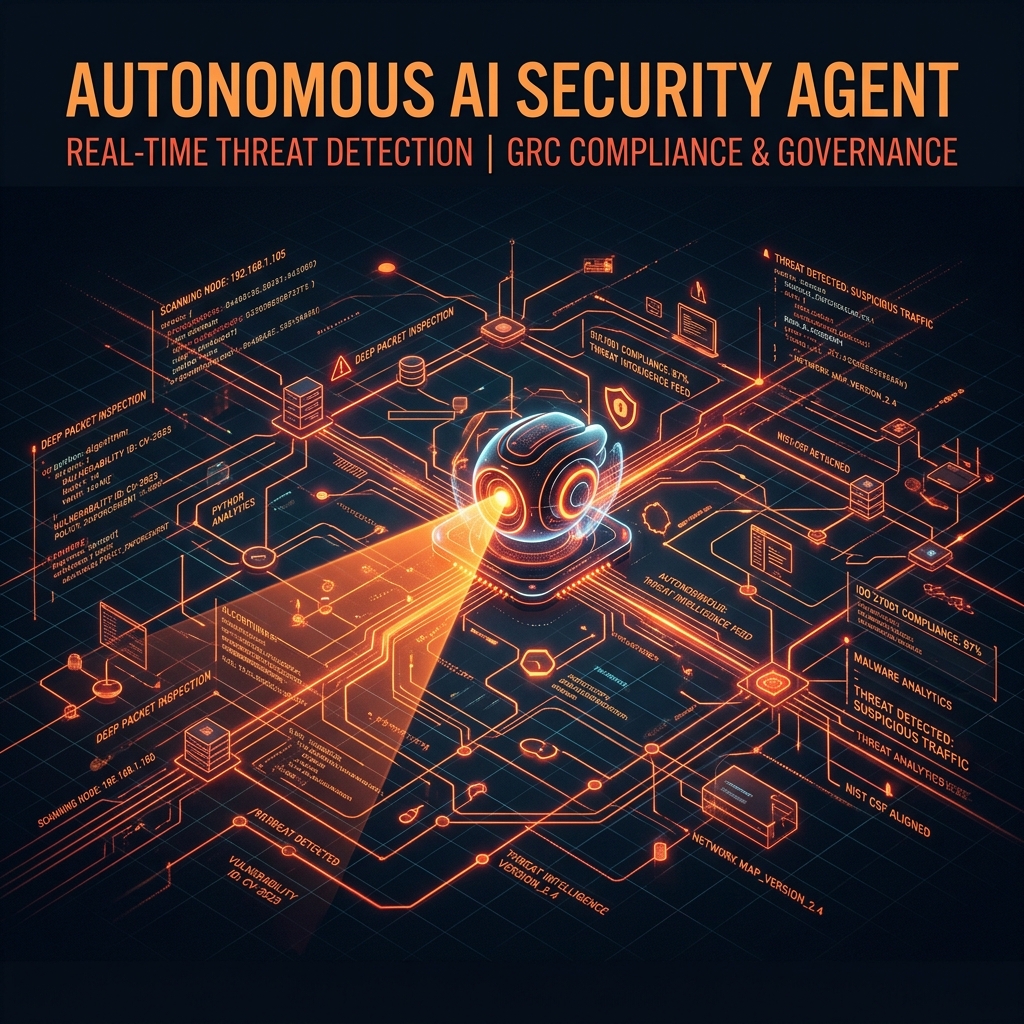
Publicly demonstrated AI agents can now chain reconnaissance, vulnerability discovery, and exploit generation with minimal human input — the same capability class we explore in our field write-up, penetration testing through AI. Defenders who still plan around "weeks to weaponise" are defending last decade's threat model.
Why AI changes cybersecurity forever. Three shifts are permanent: attacks are now machine-speed (reconnaissance and exploitation are automated), machine-scale (one operator can target thousands of assets), and machine-adaptive (payloads and phishing lures morph to evade signatures). Any control that depends on human reaction time — quarterly scans, manual triage, annual pen tests as the only assurance — is now a liability, not a safeguard.
Understanding AI-Assisted Cyber Attacks
To defend effectively, security leaders must understand how adversaries are actually using AI. These techniques map cleanly to MITRE ATT&CK and, for AI-specific threats, to MITRE ATLAS.
Treating "AI attacks" as a future problem. The techniques above are in active use today. The mistake isn't under-estimating AI's ceiling — it's under-estimating how cheaply and quickly it industrialises ordinary attacks against your unpatched, internet-facing assets.
Key Recommendations at a Glance
The blueprint's guidance can be distilled into a prioritised control set. Use this table to brief your board and sequence investment.
| Recommendation | Purpose | Business Benefit | Difficulty | Priority |
|---|---|---|---|---|
| Continuous attack surface management | Know every exposed asset | Eliminates blind spots | Medium | Critical |
| Rapid remediation of known-exploited flaws | Close the exploit window | Prevents machine-speed breach | Medium | Critical |
| Phishing-resistant MFA (FIDO2) | Stop AiTM & token theft | Protects privileged access | Medium | Critical |
| AI-aware detection & 24×7 SOC | Catch morphing attacks | Faster detect & respond | High | High |
| Zero Trust architecture | Limit lateral movement | Contains blast radius | High | High |
| AI governance & risk register | Control AI usage | Prevents shadow-AI leaks | Low | High |
| Continuous validation (BAS / pen testing) | Prove controls work | Assurance, not assumption | Medium | High |
| Secure your own AI (LLM/RAG/agents) | Close AI attack surface | Safe AI adoption | Medium | High |
Pillar 1 — Security Governance & AI Risk Management
Technology without governance drifts. The blueprint expects a documented, board-visible programme that owns AI risk explicitly. That means a security governance charter, an AI Acceptable Use Policy, an AI risk register that inventories every model, dataset, and third-party AI service in use, and clear board oversight of cyber risk as a business risk. Third-party and vendor AI must be governed too — you inherit the risk of every model your suppliers embed.
Business impact: without governance, "shadow AI" (staff pasting sensitive data into public chatbots) becomes your most common data-leak channel, and you cannot demonstrate due diligence to regulators. Real-world example: employees uploading source code or customer data to consumer AI tools — invisible until it surfaces in a breach or an audit.
Stand up governance fast with a virtual CISO and a GRC programme, anchor it in an ISO 27001 ISMS and an AI governance framework aligned to the NIST AI RMF, and validate suppliers with third-party risk assessments. A CERT-In readiness assessment then confirms you can evidence it all.
Best practices: classify AI use cases by risk; require human-in-the-loop for high-impact actions; log all AI interactions; and review the AI risk register quarterly. Common mistake: writing the policy but never operationalising it — governance on paper fails audit and reality alike. Implementation tip: start the AI risk register this week, even as a spreadsheet; you cannot govern what you have not inventoried.
Pillar 2 — Technical Controls & Zero Trust
This is where the blueprint has the most teeth. The controls below are ordered roughly by leverage against AI-assisted attacks.
Retire push-notification and SMS/OTP MFA for administrators first. AiTM phishing kits defeat them trivially; FIDO2 hardware keys are cryptographically bound to the origin and cannot be phished. Prioritise privileged and internet-facing accounts, then roll outward.
How Adayptus helps: we validate these controls rather than assume them — Zero Trust design and secure architecture reviews; cloud security assessments and hardening across AWS, Azure, and GCP; application, API, mobile, and network VAPT; and DevSecOps with SAST, DAST, SCA, secure code review, and threat modeling. Common mistake: buying tools without tuning or validating them; a mis-scoped EDR or an unrotated secret is a false sense of security.
Pillar 3 — AI-Aware Security Operations
Signature-based alerting is blind to morphing, automated attacks. The blueprint calls for detection that reasons about behaviour. Practically, that means a 24×7 SOC with behavioural analytics, curated threat intelligence, proactive threat hunting, detection engineering (building and tuning use cases), SOAR for machine-speed response, and a rehearsed incident-response capability. Red and purple teaming keep detections honest.
Business impact: the difference between a contained incident and a headline breach is mean-time-to-detect and respond. Against automated adversaries, minutes matter — and CERT-In's 6-hour reporting clock makes fast detection a compliance requirement, not just a nicety.
Map your detection coverage to MITRE ATT&CK and run purple-team exercises to find the gaps. A coverage matrix turns "we have a SIEM" into "we can detect these specific adversary behaviours" — the evidence a board and a regulator actually want.
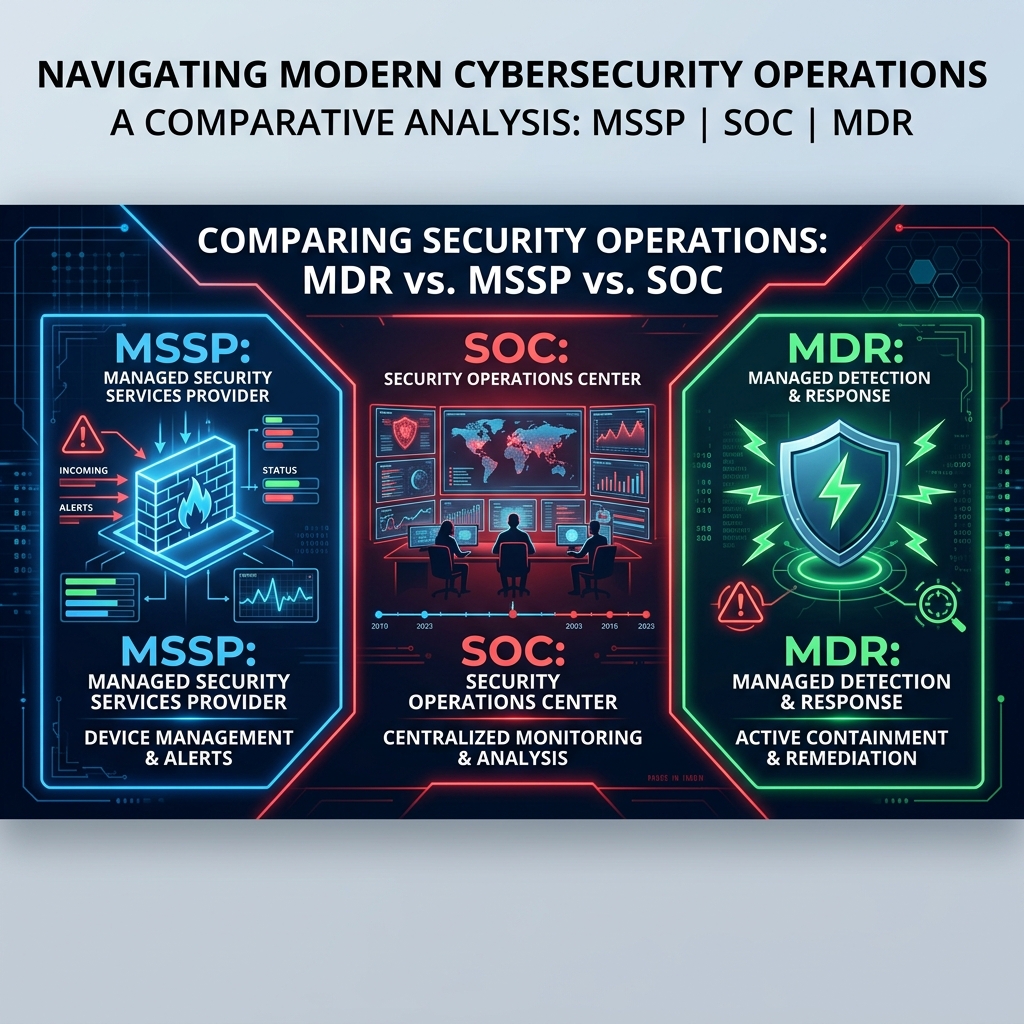
How Adayptus helps: SOC services and 24×7 Managed Detection & Response with behavioural analytics and India-resident log retention; threat hunting; incident response and digital forensics; and red team / purple team exercises to validate detections. See our MDR vs MSSP vs SOC guide to choose the right model. Common mistake: a SIEM full of noisy, untuned alerts nobody actions — volume is not visibility.
Pillar 4 — Vulnerability & Exposure Management
When exploits are weaponised in hours, exposure management becomes the single highest-leverage discipline. The blueprint expects continuous attack surface management (ASM), continuous scanning, risk-based prioritisation (fix what's exploitable and internet-facing first), disciplined patch management, and — crucially — validation that fixes actually hold, via breach-and-attack simulation and continuous testing.
| Capability | What it answers | Cadence |
|---|---|---|
| Attack Surface Management | "What of ours is exposed?" | Continuous |
| Vulnerability scanning | "What weaknesses exist?" | Continuous / daily |
| Exposure prioritisation | "What must we fix first?" | Continuous |
| Penetration testing | "Can it be exploited?" | Periodic + on change |
| Breach & Attack Simulation | "Do our controls stop it?" | Continuous |
How Adayptus helps: attack surface management and enterprise ASM, continuous security validation and breach & attack simulation, and continuous vulnerability management backed by expert VAPT. Implementation tip: prioritise by exploitability and exposure, not raw CVSS — a medium-severity flaw on an internet-facing box beats a critical one buried three networks deep.
Pillar 5 — Securing Your Own AI
Adopting AI expands your attack surface. The blueprint — and frameworks like the OWASP Top 10 for LLM Applications, MITRE ATLAS, and Google's SAIF — make clear that AI systems need dedicated security testing:
Before you ship an AI feature to production, subject it to an AI security assessment, LLM security testing, prompt-injection testing, and AI red teaming. Our applied research — advanced LLM security testing and Secure AI for the boardroom — shows why "it passed QA" is not "it's secure."
The CERT-In AI Blueprint Maturity Model
Use this five-level model to locate yourself honestly and set a target. Most Indian mid-market organisations start at Level 1–2; the blueprint expects a credible path to Level 4+.
| Level | Posture | Characteristics |
|---|---|---|
| 1 · Reactive | Compliance-first | Annual pen test, quarterly scans, SMS OTP, no AI governance |
| 2 · Developing | Tooling in place | EDR + SIEM deployed, some MFA, ad-hoc patching |
| 3 · Managed | Operationalised | 24×7 SOC, phishing-resistant MFA for admins, ASM started |
| 4 · Proactive | Threat-informed | Continuous validation, Zero Trust, AI governance, purple teaming |
| 5 · Adaptive | Resilient | Automated response, AI-aware detection, AI systems red-teamed continuously |
Practical Implementation Roadmap (30–360 Days)
You cannot do everything at once. Sequence by risk reduction per unit of effort. This phased roadmap is the one we use with clients.
| Phase | Focus | Key actions |
|---|---|---|
| 0–30 days | Stop the bleeding | Attack surface discovery; patch known-exploited internet-facing flaws; FIDO2 MFA for admins; start AI risk register; confirm CERT-In reporting path & PoC |
| 30–60 days | Establish visibility | Centralise logging (180-day, in-India); onboard SOC/MDR; baseline VAPT of crown-jewel apps & APIs; AI Acceptable Use Policy |
| 60–90 days | Harden & test | Cloud hardening; EDR/XDR tuning; secrets management; first purple-team exercise; AI/LLM security assessment of production AI |
| 90–180 days | Operationalise | Zero Trust rollout; micro-segmentation; continuous validation / BAS; detection-engineering programme; IR tabletop & retainer |
| 180–360 days | Mature & assure | Red teaming; continuous AI red teaming; ISO 27001 / SOC 2 certification; board-level metrics; drive to Maturity Level 4–5 |
Run the 0–30 day phase as a focused sprint with executive sponsorship. The fastest, cheapest risk reduction is almost always: find what's exposed, patch the exploitable, and lock down privileged identity. Everything else builds on that base.
Industry-Specific Guidance
Implementation Checklists
- ✓ Cyber & AI risk on the board agenda, with named ownership
- ✓ AI Acceptable Use Policy approved & communicated
- ✓ Funded 30–360 day roadmap with milestones
- ✓ CERT-In readiness confirmed (reporting path, PoC, logs)
- ✓ Third-party / vendor AI risk governed
- ✓ Independent assurance (VAPT, red team) scheduled
- ✓ Continuous ASM + prioritised, exploitability-based patching
- ✓ FIDO2 MFA + PAM for privileged & internet-facing accounts
- ✓ EDR/XDR with behavioural detection, tuned
- ✓ Centralised logging (180-day, in-India) into 24×7 SOC
- ✓ Zero Trust + micro-segmentation; secrets vaulted & rotated
- ✓ AI/LLM systems prompt-injection & red-team tested
- ✓ Immutable, tested backups; IR playbook rehearsed
Common Mistakes Organisations Make
1. Defending against last year's tempo
Quarterly scans and 30-day patch SLAs assume human-speed attackers. Known-exploited, internet-facing flaws are now hour-scale emergencies.
2. Treating tools as outcomes
A SIEM, an EDR, and a WAF are not a security programme. Untuned and unvalidated, they generate confidence without protection.
3. Ignoring shadow AI
Staff already use public AI tools. Without governance and monitoring, that's an unmanaged data-exfiltration channel.
4. Shipping AI features untested
Functional QA does not catch prompt injection, RAG leakage, or excessive agency. AI needs security testing before launch.
5. Never validating defences
If you have never red-teamed or run BAS, you are assuming your controls work. Assumption is not assurance.
The Future of AI Security
Expect the defender's toolkit to become as automated as the attacker's: AI-assisted triage and response in the SOC, autonomous exposure validation, and detection models that reason about intent. Regulation will deepen — the blueprint is an early move, and standards like NIST AI RMF, NIST CSF 2.0, and ISO/IEC 42001 will converge into board-level expectations. The organisations that win will be those that treat security as a continuous, measurable, AI-aware capability — not a periodic audit. Our perspective on where offense is heading is in The Future of Offensive Security in the Age of AI.
Why Choose Adayptus Consulting?
Adayptus Consulting is an India-based cybersecurity firm helping enterprises and startups implement the CERT-In AI Blueprint end to end — from board-level governance to hands-on offensive testing.
Need help implementing the CERT-In AI Blueprint?
Contact Adayptus Consulting today. Request an AI Security Assessment or book a free security consultation, and we'll map the blueprint to a prioritised, funded roadmap for your organisation.
Final Thoughts: Operationalising the CERT-In AI Blueprint
The CERT-In AI Blueprint is not a document to file — it is an operating model to adopt. AI has permanently changed the tempo, scale, and adaptability of attacks, and the only durable answer is a security programme that is continuous, threat-informed, and AI-aware across governance, identity, exposure, operations, and your own AI systems. Start with the 0–30 day sprint, follow the roadmap, validate everything, and measure your progress against the maturity model. Do that, and the blueprint stops being a compliance burden and becomes what it was designed to be: genuine resilience against machine-speed adversaries.
Disclaimer: This article is an original, informational implementation guide inspired by CERT-In's blueprint for defending against AI-assisted exploitation, and by widely-used security frameworks. It paraphrases and expands on public guidance and does not reproduce official text. It is not legal or compliance advice; always refer to the latest CERT-In publications and engage qualified advisors for your organisation's specific obligations.
References
- CERT-In — Indian Computer Emergency Response Team (blueprint for defending against AI-assisted exploitation).
- OWASP — Top 10 for LLM Applications and the OWASP Top 10.
- MITRE — ATT&CK and ATLAS (adversarial threat landscape for AI systems).
- NIST — Cybersecurity Framework 2.0 and AI Risk Management Framework.
- CISA — Known Exploited Vulnerabilities Catalog.
- Google — Secure AI Framework (SAIF); Microsoft — Security Blog & AI security guidance.
Frequently Asked Questions
Click any question to expand the answer.
QWhat is the CERT-In AI Blueprint?
The CERT-In AI Blueprint is a defensive framework from India's Computer Emergency Response Team that helps organisations reduce exposure to, and defend against, AI-assisted exploitation. It shifts security from periodic and reactive to continuous and threat-informed, emphasising attack surface management, rapid remediation, phishing-resistant identity, AI-aware detection, and governing your own use of AI.
QWho needs to comply with the CERT-In AI Blueprint?
It is most urgent for critical infrastructure, banking, NBFCs, FinTech, insurance, healthcare, SaaS, manufacturing/OT, and government — any organisation with internet-facing systems and valuable data. It complements sector mandates such as the RBI Master Direction, SEBI CSCRF, and CERT-In's 6-hour incident-reporting rule.
QWhat are AI-assisted cyber attacks?
They are attacks that use AI to automate and accelerate parts of the kill chain — reconnaissance, vulnerability discovery, exploit generation, phishing and deepfakes, polymorphic malware, and autonomous "agentic" operations. The effect is machine-speed, machine-scale, machine-adaptive attacks that outpace human-reaction-time defences.
QHow do we start implementing the blueprint?
Begin with a 0–30 day sprint: discover your attack surface, patch known-exploited internet-facing vulnerabilities, roll out phishing-resistant (FIDO2) MFA for privileged accounts, start an AI risk register, and confirm your CERT-In reporting path. Then follow the 30/60/90/180/360-day roadmap in this guide, validating each control with testing.
QDo we need to secure our own AI systems?
Yes. Any AI feature you deploy — chatbots, copilots, RAG systems, agents — expands your attack surface with risks such as prompt injection, data leakage, RAG poisoning, model poisoning, and excessive agency. Subject production AI to LLM security testing, prompt-injection testing, and AI red teaming before and after launch, guided by the OWASP Top 10 for LLM Applications and MITRE ATLAS.
QHow does Adayptus help implement the CERT-In AI Blueprint?
Adayptus delivers the full lifecycle: CERT-In readiness and GRC/vCISO governance; attack surface and exposure management; application, API, mobile, network, and cloud VAPT; red and purple teaming; AI security assessment, LLM/prompt-injection testing and AI red teaming; DevSecOps with SAST/DAST/SCA and secure code review; 24×7 SOC/MDR, threat hunting, and incident response; plus ISO 27001, SOC 2, PCI DSS and RBI-aligned compliance — with actionable reports and remediation support.

Peyush Baranwal
Senior Delivery Manager — Cyber Security, Adayptus
Peyush Baranwal is a Senior Delivery Manager at Adayptus Consulting with 11+ years of experience designing, implementing, and managing enterprise security programmes. His core expertise spans Vulnerability Assessment & Penetration Testing (VAPT), Application Security, and Security Operations — leading web, mobile, API, and infrastructure security assessments for CISOs and security teams across BFSI, healthcare, and SaaS. He focuses on measurable risk reduction, governance maturity, and operationalising detection-and-response capability. Outside work, Peyush is a passionate biker and part-time photographer.
Connect on LinkedInOn This Page
- What Is the CERT-In AI Blueprint?
- Understanding AI-Assisted Cyber Attacks
- Key Recommendations at a Glance
- Pillar 1 — Security Governance & AI Risk Management
- Pillar 2 — Technical Controls & Zero Trust
- Pillar 3 — AI-Aware Security Operations
- Pillar 4 — Vulnerability & Exposure Management
- Pillar 5 — Securing Your Own AI
- The CERT-In AI Blueprint Maturity Model
- Practical Implementation Roadmap (30–360 Days)
- Industry-Specific Guidance
- Implementation Checklists
- Common Mistakes Organisations Make
- The Future of AI Security
- Why Choose Adayptus Consulting?
- Final Thoughts: Operationalising the CERT-In AI Blueprint
- References
- Frequently Asked Questions